


Table of Contents
ToggleBlack wrought iron patio furniture has remained a cornerstone of outdoor living for generations, and for good reason. Its blend of timeless elegance, structural durability, and versatility makes it an ideal choice for homeowners looking to create an inviting outdoor space without constant fuss. Whether you’re furnishing a sprawling backyard or a compact balcony, wrought iron delivers both aesthetic appeal and longevity that justifies the investment. This guide walks you through what makes wrought iron special, how to evaluate quality, design options that work with modern homes, and the straightforward maintenance required to keep your pieces looking sharp year after year.
Key Takeaways
- Black wrought iron patio furniture combines timeless elegance with structural durability, withstanding weather extremes and heavy use without the splinting of wood or denting of aluminum.
- Quality black wrought iron is constructed using hot-rolled pure iron with welded or riveted joints, 12–14-gauge tubing, and a multi-step finish process including primer and polyester powder-coat to prevent rust.
- Black wrought iron adapts to every design style—from Victorian ornamental scrollwork to minimalist contemporary—making it equally sophisticated in farmhouse, Mediterranean, and modern settings.
- Straightforward seasonal maintenance including annual sealant application, monthly rinsing, and prompt treatment of surface rust keeps your wrought iron furniture looking sharp for decades.
- Anchor your patio layout with black wrought iron furniture as focal points, and pair iron pieces with complementary materials like stone, wood, or rattan along with cushions in neutral tones to balance visual weight.
Why Black Wrought Iron Is the Gold Standard for Outdoor Furniture
Black wrought iron patio furniture strikes a rare balance between form and function. Unlike painted wood, which splinters and peels, or aluminum, which dents easily, wrought iron withstands weather extremes and heavy use without compromising its appearance. The material’s inherent strength means thinner gauges can be used while maintaining rigidity, resulting in furniture that looks lighter and more graceful than other metal options.
The black finish isn’t just aesthetic, it absorbs and radiates heat efficiently, creating a warm seating surface in cooler months. Structurally, iron’s weight (typically 15–30% heavier than comparable aluminum) distributes load evenly, so a dining set or chaise lounge won’t wobble on uneven flagstone or decking. This stability matters when you’re hosting a gathering: nobody wants to shift their weight and feel movement in a chair.
Designers and homeowners gravitate toward wrought iron because it adapts to nearly every style direction. From Victorian scrollwork to minimalist geometric patterns, black iron reads as intentional and sophisticated. Unlike teak or wicker, which command respect for their material properties, wrought iron works equally well in farmhouse, contemporary, Mediterranean, and eclectic settings.
Understanding Wrought Iron Quality and Construction
Not all wrought iron patio furniture is created equal, and understanding construction details will save you from cheap knockoffs that rust prematurely or crack under use. Quality starts with the metal itself: pure wrought iron, which contains less than 0.3% carbon, resists corrosion far better than steel (which contains 0.3–1.7% carbon). Reputable manufacturers typically use hot-rolled wrought iron stock, which has superior workability and longevity compared to cold-rolled alternatives.
The key construction elements to evaluate are joint integrity, gauge thickness, and finish application. Look for furniture where legs, arms, and seat frames are welded or riveted rather than bolted, these permanent connections won’t loosen over time or rattle. Gauge matters too: 12-gauge to 14-gauge tubing is the industry sweet spot for residential patio furniture. Anything thinner feels fragile, while thicker gauges add unnecessary weight without benefit.
The finish is where many budget pieces fail. Quality black wrought iron receives a multi-step process: surface preparation (grinding, sand-blasting, or wire-brushing to remove mill scale), primer application, and a durable topcoat, typically polyester powder-coat or marine-grade paint. This three-part system prevents rust blooming beneath the surface. When comparing pieces, ask the manufacturer about finish specifications. A single coat of paint on bare metal is a red flag.
Popular Styles and Design Options
Classic and Contemporary Aesthetics
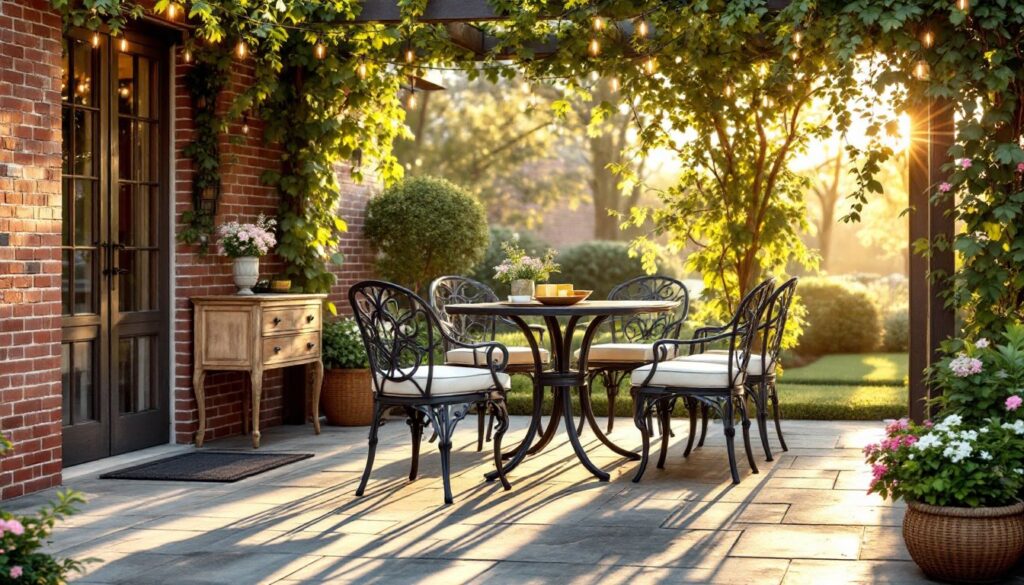
Black wrought iron thrives in two broad design camps, and most homeowners fall somewhere between them. Classic designs lean into ornamental details: scrolled armrests, curved stretchers, finials, and leaf-and-flower motifs inspired by 18th- and 19th-century blacksmithing. A scrolled dining chair or settee with curlicues and cast-iron accents creates a formal, sophisticated look that works beautifully on brick patios, under pergolas, or paired with stone features.
Contemporary wrought iron strips away ornamentation in favor of clean lines, geometric patterns, and minimalist silhouettes. Straight tubes, angular frames, and flat surfaces dominate. This approach pairs naturally with modern architecture, decking, and landscaping. For example, a simple black iron rectangular dining table with hairpin legs and linear-slatted seating suits a mid-century modern or industrial aesthetic.
Within these camps, you’ll find hybrid pieces that blend both sensibilities. A chair might feature a classically scrolled back paired with a streamlined seat and frame. Many contemporary designers also reference wrought iron’s historical heritage through selective details, perhaps a single scrolled element, rather than full ornamentation. When shopping, consider your home’s exterior style first. A heavily ornamental cast-iron settee looks out of place against glass and steel, just as minimalist iron chairs can appear cold beside traditional brick and shutters. Southern Living and similar design publications often showcase how regional architecture influences furniture choices, and those examples can clarify your direction.
Maintenance Tips to Keep Your Furniture Looking New
Here’s the honest truth: wrought iron requires more upkeep than aluminum or resin, but it’s straightforward, low-skill work that takes minutes per season. Start with prevention. A quality clear polyurethane or furniture-grade sealant applied annually extends the factory finish’s life significantly. Choose a sealant rated for exterior metal, not wood. Apply it with a soft brush or lint-free cloth in a thin, even layer, heavy coats trap moisture underneath.
Regular cleaning prevents dirt and debris from holding moisture against the surface. Rinse your furniture monthly with a garden hose, then wipe dry with a cloth. For stubborn grime, use a soft-bristle brush and mild soap (a few drops of dish detergent in a bucket of warm water). Avoid steel wool or abrasive scrubbers: they scratch and expose bare metal, inviting rust.
If you spot surface rust (an orange or brown discoloration), don’t panic. Light rust is cosmetic and easily reversed with a wire brush attachment on a power drill or a hand-held wire brush. Sand the affected area, wipe clean, apply primer, and touch up with black exterior paint. Deep rust that’s cracked or flaking requires more aggressive intervention: grind or sand to bare metal, prime, and repaint. If rust has compromised structural integrity (holes, severe pitting, or soft spots), that piece needs professional restoration or replacement. Store cushions and fabrics indoors during off-season months to prevent mildew and water damage.
Designing Your Patio Layout with Black Wrought Iron Pieces
Black wrought iron furniture anchors an outdoor space like few other materials can. Its visual weight and formal presence make it suitable for focal points: a dining set under a pergola, a seating cluster on a stone patio, or a statement bench along a garden path. Start by defining zones, dining, lounging, entertaining, then select iron pieces that serve each zone’s function while maintaining visual continuity.
Scaling matters. A heavy wrought iron dining table dominates a small deck: reserve it for patios at least 12 feet by 14 feet. Smaller spaces benefit from individual chairs, side tables, or a compact two-person settee. Mix iron with complementary materials to avoid visual heaviness. Pair a black iron frame with stone, wood, or tile surfaces: add weathered teak side tables or woven rattan accents. Wrought iron doesn’t demand matching suites: many designers successfully combine iron chairs from different eras or styles at one table, creating collected, intentional variety.
Cushions and textiles soften iron’s inherent hardness. Deep-seated wrought iron dining chairs become more inviting with outdoor cushions in neutral tones or subtle patterns. Wrought iron lounges and settees nearly require cushioning for comfort. Opt for solution-dyed fabric (Sunbrella or equivalent) rated for UV and moisture resistance: cheap outdoor fabric fades and mildews within a season. Color-wise, black iron pairs with virtually every cushion hue. Cream, charcoal, sage green, and warm terracotta all complement the material’s formality without competing for attention. Lighting also enhances black iron’s elegance. Overhead string lights, wall-mounted sconces, or a chandelier hung from a pergola above an iron dining set creates ambiance and highlights the furniture’s details after sunset.
Conclusion
Black wrought iron patio furniture delivers timeless appeal backed by genuine durability. Quality pieces, properly maintained, outlast trends and weather decades of use. Whether your style leans classical or contemporary, wrought iron accommodates both with grace. The upfront investment and modest seasonal maintenance pale in comparison to the years of reliable, handsome service you’ll receive. Your outdoor space deserves furniture as thoughtful as your home itself.