

Table of Contents
ToggleA dining room tells a story. It’s where families gather, business is discussed over wine, and memories are made around a well-appointed table. Luxury dining room furniture isn’t just about expense, it’s about investing in quality pieces that anchor a space with confidence and refinement. Whether you’re working with a sprawling formal dining room or a compact eat-in kitchen, the right furniture transforms how you live and entertain. This guide walks you through selecting luxury dining room furniture that works for your space, your style, and your lifestyle.
Key Takeaways
- Luxury dining room furniture balances quality construction, timeless design, and genuine comfort—investing in well-made pieces anchors a space with confidence and supports how you live and entertain.
- Your table is the centerpiece; choose dimensions based on your space (36 inches wide standard, 3-foot clearance minimum on all sides) and select materials like solid hardwood, stone, or reclaimed wood for durability and visual impact.
- Upholstered dining chairs with proper proportions (10–12 inches below table height, 16–18 inches seat depth) and high-density foam signal luxury while mixing styles and adding benches creates visual interest without sacrificing comfort.
- Storage pieces like sideboards and hutches serve dual purposes—they keep serving dishes and linens organized while becoming focal points when styled with mirrors or artwork above.
- Thoughtful lighting (hung 30–36 inches above the table), coordinated finishes across hardware and fixtures, and curated accessories like runner rugs and centerpieces complete the room while maintaining visual coherence and inviting lingering conversation.
Define Your Luxury Dining Style: Key Design Elements That Matter
Before spending a dime, know what you’re building toward. Luxury isn’t a single look, it spans from moody transitional with warm wood tones to sleek contemporary with metal accents to ornate traditional with carved details.
Start by asking yourself: Will this room be formal, multi-use, or somewhere in between? A formal dining room suited for hosting demands different furniture than a casual family dining space that doubles as assignments central. Consider how often you entertain and what impression you want guests to have the moment they walk in.
Color palette matters more than you’d think. Neutral foundations, warm whites, soft grays, deep charcoals, give luxury pieces room to breathe and anchor a timeless feel. Accent colors work best in textiles (upholstered chairs, runner rugs) rather than built-in pieces. This flexibility lets you refresh the room without replacing furniture.
Proportions are non-negotiable. A massive table in a small room overwhelms the space: a dainty table in a cavernous dining room looks abandoned. Measure your space first and account for a minimum 3-foot clearance on all sides for comfortable seating and chair pull-back room.
Choosing the Perfect Luxury Dining Table for Your Space
The table is the centerpiece, literally and figuratively. It sets the tone for the entire room and anchors everything else around it.
Length and width are practical starting points. Standard dining tables run 36 inches wide: lengths vary from 48 inches for four-person tables to 84+ inches for eight to ten people. Extending tables offer flexibility if you entertain sporadically. Account for a server, placemat setup, and water glasses when calculating real-world needs, 12 inches per place setting is the baseline.
Shape influences flow and conversation. Rectangular tables suit formal entertaining and tighter spaces. Round or oval tables promote intimacy and work well in rooms where you want no “head” position. Square tables fit smaller spaces but max out around seating for four comfortably.
Materials and Finishes That Showcase Quality
Wood remains the gold standard for luxury dining tables. Solid hardwoods like walnut, oak, and cherry develop character over time and accept quality finishes beautifully. Veneer over plywood is cost-effective but less durable for high-traffic settings: look for solid construction if longevity matters.
Finishes signal both style and durability. Hand-rubbed oil finishes feel warm and invite touch, they require occasional maintenance but age gracefully. Lacquer and polyurethane offer more protection against water rings and scratches, essential for family living. Matte finishes hide dust better than glossy ones, a practical consideration.
Pairing wood with other materials elevates the design. Metal legs (brass, steel, or stainless) add modern edge to traditional wood tops. Stone tops, marble, granite, slate, communicate luxury immediately but require coasters and care against heat and acidic liquids. Glass tops visually lighten heavy spaces but show fingerprints and require frequent cleaning.
Industrial-inspired concrete or reclaimed wood tables resonate with contemporary and transitional spaces. These materials develop patina and wear that tells a story, making them feel curated rather than mass-produced. Curated selections of luxury dining tables showcase the range available from established brands working in these materials.
Elegant Seating Options: Chairs and Benches That Complement Your Table
Chairs make or break comfort at the table. Mismatched heights, shallow seats, or inadequate back support turn a beautiful table into a place people want to leave quickly.
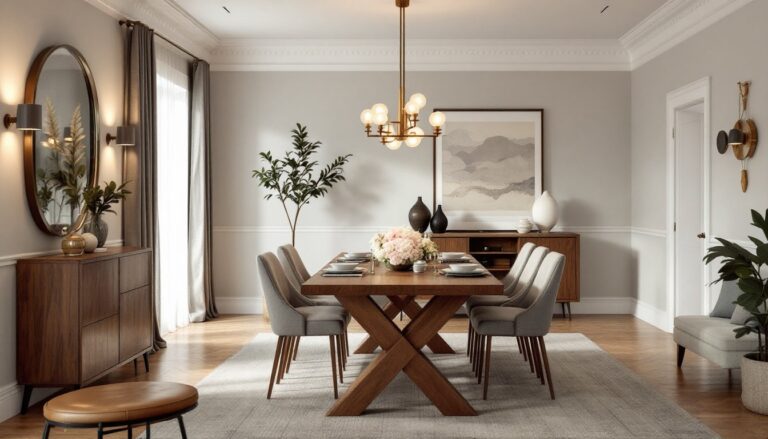
Seat height should sit 10–12 inches below table surface: arm height (if included) should align roughly with table surface so diners can slide chairs in and out easily. Depth of 16–18 inches is minimum: upholstered seats need cushioning that doesn’t flatten after six months of use. Look for high-density foam rated for furniture use, not furniture-store scrap.
Upholstered dining chairs signal luxury more than wood alone. High-performance fabrics resist staining without feeling plastic, brands use polyurethane microfiber, solution-dyed acrylic, and linen-look synthetics that age well. Leather requires commitment to conditioning and shows every spill, making it better suited to formal rooms than family kitchens.
Mixing chair styles works when tied together by material or color. Pairing upholstered chairs with a matching wood frame on some seats and benches on others creates visual interest without chaos. Benches maximize seating and allow flexible configurations, perfect for larger tables or rooms where you shift the layout seasonally.
Arm chairs at the head and foot of the table are traditional, but consider comfort. Armrests can feel constricting over a full meal, and they prevent pulling chairs completely under the table for a cleaner visual when the room’s not in use. Testing before buying matters: sitting in a showroom for three minutes doesn’t reveal how your back feels after an hour-long dinner.
Fully upholstered bases hide structural wood, making chairs feel refined. Exposed wood frames work in traditional and transitional settings but demand flawless finishing, every flaw shows. Metal frames read more contemporary and are forgiving about patina.
Storage and Display: Sideboards, Cabinets, and Hutches for Luxury Living
Storage furniture serves dining room life while solving a practical need: where do you keep serving dishes, linens, and bar supplies?
Sideboards are the workhorses. Low profile, typically 36–42 inches tall, they offer surface space for serving, decorative display, or a casual bar setup. Drawers and cabinet space below keep items accessible but out of sight. Quality sideboards have soft-close drawers and adjustable shelving that accommodates various dish sizes. Paired with a mirror or artwork mounted above, a sideboard becomes a focal point that anchors the room when the table isn’t actively in use.
Hutches (cabinet with open shelving above) work in more formal settings and require your dishware collection to be visually cohesive, mismatched patterns read as cluttered rather than curated. They demand commitment to styling and regular dusting but maximize vertical space in rooms with high ceilings.
Finish consistency matters. Matching or coordinating your sideboard to your table creates a pulled-together aesthetic. Contrasting finishes work when intentional, a dark walnut table with a light gray linen-finish sideboard reads as design choice, not mismatch. Metal hardware (pulls, knobs) should echo your table base or lighting fixtures to tie the scheme together.
Built-in cabinetry offers permanence and custom storage but requires professional installation and capital investment. Freestanding pieces offer flexibility if you move or redecorate. Consider your commitment to the space when choosing.
Lighting and Accessories: Completing Your Luxury Dining Room
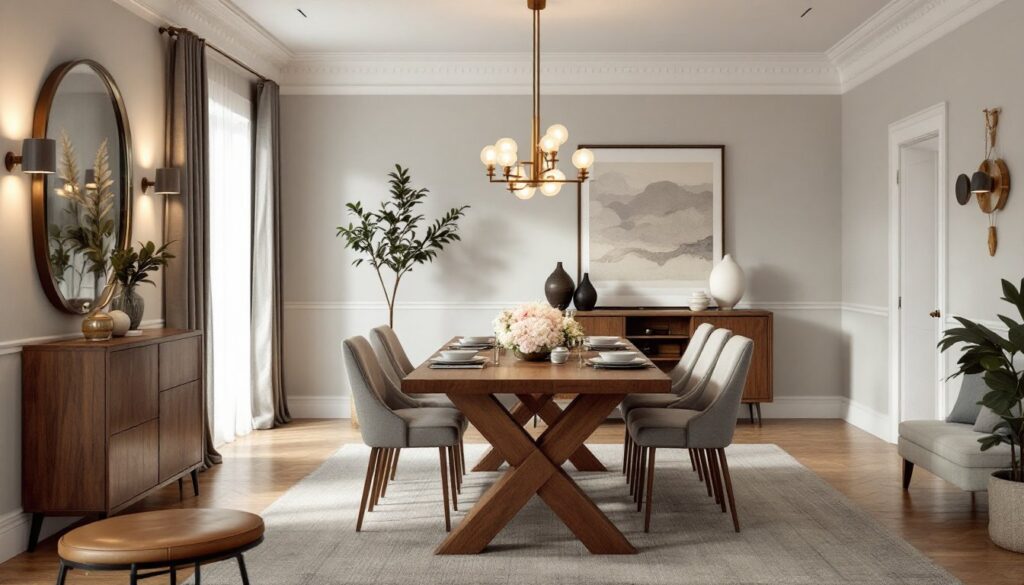
Lighting transforms a room from cold to inviting. A chandelier or statement pendant hung 30–36 inches above the table sets a luxe tone while keeping face-level brightness comfortable. Dimmers are essential, bright task lighting for setting the table, warm dimmed light for dining.
Size matters: a small fixture above a large table gets lost: an oversized fixture in a compact room overwhelms. Aim for a fixture diameter roughly two-thirds your table width. Metal finishes should coordinate with chair frames or table bases for visual coherence.
Accessories finish the room without very costly. A runner rug under the table defines the space, adds warmth, and protects flooring. Choose performance fabrics rated for heavy foot traffic: natural fibers like sisal or jute add texture but stain easily. Layering a smaller patterned rug over a larger neutral one creates depth and visual interest.
Table linens signal formality and protect your investment. Quality tablecloths (linen blends or performance fabrics) resist wrinkles better than pure linen and launder easier. Placemats or runners update faster than full cloths and work well in casual-to-transitional spaces.
Centerpieces should enhance conversation, not obstruct sightlines. Keep arrangements under 12 inches tall when people are seated. Fresh flowers, candles, or a sculptural object work: overstuffed arrangements or floating helium balloons don’t belong at a luxury table.
Wall color and art anchor the entire scheme. Soft greens, warm grays, and subtle blues read sophisticated without being trendy. Luxury dining room designs showcase how lighting, color, and accessories work together. Art hung at eye level creates a focal point: consider a large statement piece rather than a gallery wall for a more edited, luxe feel.
Incorporating modern design principles means balancing your luxury furniture with genuine functionality, every piece should earn its place through either utility or authentic beauty. Whether your aesthetic leans traditional or contemporary, the rooms that feel most luxurious are those designed for living, not just looking.
Conclusion
Luxury dining room furniture is an investment in how you live and entertain. The best pieces balance quality construction, timeless design, and genuine comfort, not just expense. Start with a cohesive vision, choose your table as your anchor, layer in complementary seating and storage, and finish with thoughtful lighting and accessories. Take time before purchasing. A slower, more intentional approach yields a dining room you’ll love for years rather than one that feels dated in a season. Your dining room should invite people to sit, linger, and connect, and that’s where true luxury begins.