




Table of Contents
ToggleMixing and matching bedroom furniture isn’t about buying a complete bedroom set anymore, it’s about creating a personalized space that reflects your style while maintaining visual harmony. With the right approach, you can blend pieces from different eras, finishes, and styles without the room feeling chaotic or disjointed. This guide breaks down the practical rules that designers use, so you can confidently combine that vintage nightstand with a modern bed frame, or layer mismatched wood tones without creating visual confusion. Whether you’re working with hand-me-downs, thrifted finds, or new purchases, understanding color, scale, proportion, and texture is the key to pulling off a cohesive, thoughtfully designed bedroom.
Key Takeaways
- A cohesive color palette with one primary wall color and 2-3 accent colors is essential for successfully mixing and matching bedroom furniture without creating visual chaos.
- Limit wood finishes to a maximum of three distinct tones and group similar undertones together to maintain harmony when combining warm and cool wood tones.
- Let one design style dominate while using the other as an accent—for example, pair a modern platform bed with a traditional dresser and tie them together through color and accessories.
- Ensure furniture is appropriately scaled to your room size and to each other, such as nightstands roughly 24-26 inches tall and 24-30 inches wide to match your bed height.
- Use textiles, lighting, artwork, and accessories as unifying elements to bridge gaps between mismatched furniture pieces and create a deliberate, designed appearance.
- Paint or stain disparate pieces in unified colors like white, gray, or black, and use matching hardware across different furniture to create visual continuity.
Start With a Cohesive Color Palette
Your color palette is the foundation of every successful room mix. Choose a primary wall color, neutrals like warm white, soft gray, or muted beige work best as a backdrop for mixed furniture, then decide on 2-3 accent colors that will tie pieces together. These accent colors don’t have to match perfectly: they simply need to share a common undertone.
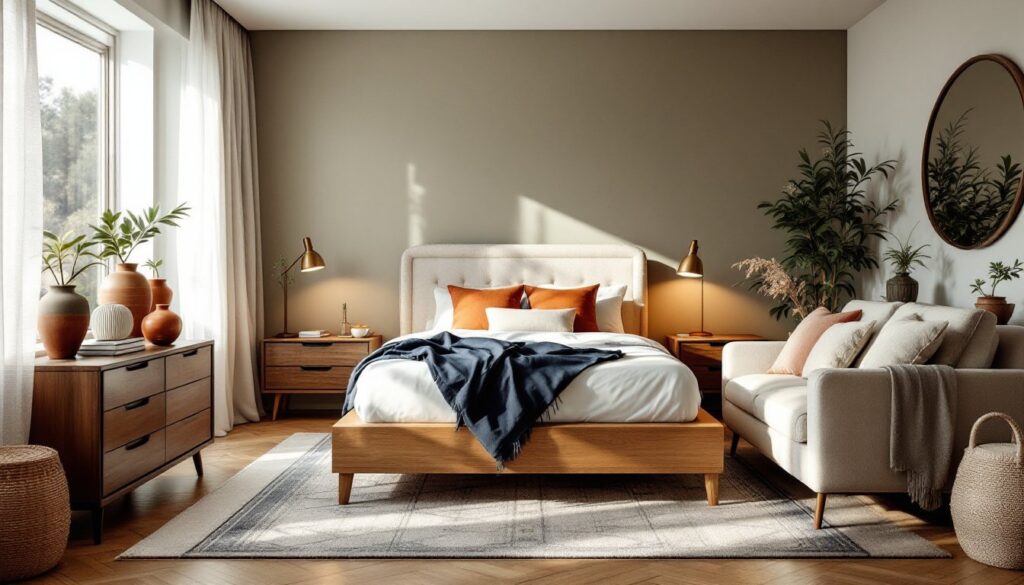
If you’re combining warm wood tones (honey oak, cherry) with cool finishes (gray-washed wood, black metal), use your accent colors to bridge the gap. For example, warm accents like rust, terracotta, or mustard can harmonize warm woods, while cool grays or navy pull together cooler finishes. The key is repetition: paint an accent wall, add throw pillows, hang artwork, or style a bookshelf with objects in your chosen colors so the eye sees them as intentional rather than mismatched.
Avoid the trap of thinking all your furniture wood must be the same shade. In real homes and well-designed interiors, variation is expected. The difference lies in controlling how many tones you introduce. Stick to a maximum of three distinct wood finishes in a bedroom to prevent visual chaos.
Balance Wood Tones and Finishes
Wood furniture comes in dozens of variations, from light blonde to deep espresso. Rather than matching everything exactly, group similar undertones together. Warm woods (red oak, cherry, mahogany) and cool woods (ash, white oak, walnut) read differently in a room, so decide which temperature dominates.
A practical approach: designate your bed frame or largest piece as your anchor. If it’s a medium oak bed, build your palette around warm undertones. Your nightstands don’t have to match the bed exactly, they could be honey oak or even a lighter or slightly darker shade of warm wood, and the room will still feel cohesive. Where you introduce contrast is equally important. Glossy finishes (stained wood, polyurethane) read lighter and more formal: matte or hand-scraped finishes feel casual and lived-in. Mixing one glossy piece with matte finishes creates visual interest without conflict.
If you have mismatched wood already, don’t panic. A fresh coat of paint or stain can unify pieces. Painting old dressers white, gray, or black is one of the most effective ways to make disparate pieces work together. Alternatively, using matching hardware, drawer pulls and knobs, across different wood pieces creates visual continuity.
Layer Different Furniture Styles
Mixing Modern and Traditional Elements
Blending modern and traditional furniture is entirely achievable if you follow a simple rule: let one style dominate and use the other as an accent. A modern platform bed with clean lines works beautifully with a traditional wooden dresser if you tie them together with color and accessories. Conversely, a vintage ornate headboard gains contemporary edge when paired with minimal nightstands and modern lighting.
The most common mistake is trying to merge too many styles equally. Instead, pick a primary aesthetic, say, contemporary farmhouse, then allow secondary pieces to bend the rules. A mid-century modern side table won’t clash with a rustic platform bed if your bedding, wall color, and accessories lean toward one cohesive direction.
When layering styles, pay attention to lines and silhouettes. Modern furniture tends toward straight edges, minimal ornamentation, and geometric shapes: traditional pieces feature curves, carved details, and rounded legs. You can mix these, but do it intentionally. A sleek glass or metal nightstand reads clean against an ornate carved dresser. A contemporary upholstered headboard works with traditional wood legs on a frame. The contrast becomes a design feature rather than a mistake when the mix is deliberate and balanced throughout the room.
Consider Scale and Proportion
A sprawling California king bed dominates a small bedroom: stick a petite vanity in that same room and the pieces feel disconnected. Scale and proportion are about making sure your furniture sizes relate logically to your space and to each other.
Measure your room first. In a 10′ × 12′ bedroom, a queen or full-size bed is typically appropriate. A nightstand should be roughly the same height as the top of your mattress (around 24–26 inches) and ideally 24–30 inches wide. Dressers and chest heights vary, a standard dresser is 30–36 inches tall, but the width matters more for balance. Two narrow nightstands flanking a bed feel more proportional than one heavy dresser shoved against it.
Mismatched pieces work when they’re scaled appropriately. A vintage vanity with delicate legs won’t overwhelm a room the way a massive modern platform bed might. Mixing scales actually creates visual interest, a low-profile platform bed with a tall dresser and medium nightstands guides the eye around the room without monotony. The danger zone is combining pieces that are all heavy and oversized, or all tiny and dainty. Vary the scale, but ensure each piece relates logically to the room size and the other furniture.
Unify Your Space With Accessories and Textiles
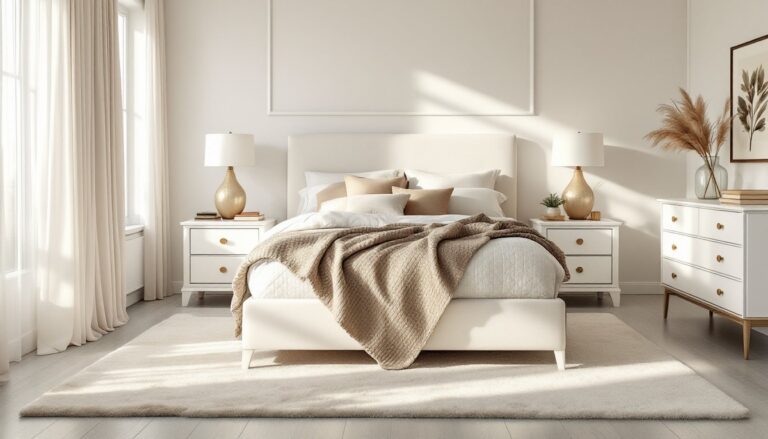
Accessories are your secret weapon for tying mismatched furniture together. Textiles, bedding, curtains, rugs, and throw blankets, bridge gaps that wood tones and styles can’t.
Choose a cohesive bedding set or layered linens that echo your accent colors. Add a patterned rug that repeats those same colors, then style your nightstands with matching lamps, framed photos, or small decorative objects. When someone looks at your bedroom, they should see a deliberate story, not a random collection of pieces.
Lighting is equally crucial. Matching nightstand lamps, or lamps in the same finish and style, create visual continuity even if the nightstands themselves vary. Wall sconces, overhead fixtures, and accent lighting that complement your room’s color scheme make mismatched furniture feel intentional and designed.
Wallart, mirrors, and plants also unify mixed pieces. A large mirror above a vintage dresser elevates it: artwork that ties your accent colors together makes the entire room feel cohesive. Resources like MyDomaine and House Beautiful showcase how layered accessories transform mixed furniture into polished, magazine-worthy rooms.
Textiles are forgiving and changeable. If you’re unsure about a furniture combination, invest in quality bedding, curtains, and a rug first. They’ll anchor your palette and make it easier to evaluate whether each piece belongs. You can update textiles seasonally or when your taste shifts, but furniture stays put, so get the bigger pieces right, and let textiles handle the visual harmony.
Conclusion
Mixing and matching bedroom furniture is a learnable skill, not an innate talent. Start with a clear color palette, keep wood tones intentional, balance your styles, respect scale, and let accessories do the heavy lifting. The goal isn’t perfection, it’s a bedroom that feels authentically yours, comfortable to live in, and visually balanced. Trust your instincts, take your time building the room, and don’t be afraid to edit. The best mixed-furniture bedrooms look effortlessly curated because they are.