
Table of Contents
ToggleCurved patio furniture has quietly become the gold standard for modern outdoor living. Unlike rigid rectangular pieces that eat up square footage and create awkward sightlines, curved designs flow with natural movement and maximize conversation areas. Whether you’re working with a compact urban balcony or sprawling suburban backyard, curved patio furniture adapts to your space, and your lifestyle. This guide covers what’s actually worth buying, how to pick pieces that work with your home’s layout, and the maintenance tricks that keep your investment looking fresh year-round.
Key Takeaways
- Curved patio furniture maximizes conversation areas and saves space by flowing naturally with your layout, unlike rigid rectangular pieces that create awkward sightlines and waste square footage.
- Curved sectionals and seating come in modular and fixed styles; modular pieces offer flexibility for frequent rearranging, while fixed curved furniture provides greater durability and weather resistance for permanent installations.
- Proper measurements and painter’s tape visualization prevent costly returns, as curved pieces visually occupy more space than linear measurements suggest.
- Maintenance separates furniture that lasts five years from pieces lasting twenty years—prioritize regular cleaning, seasonal sealing for wood, cushion rotation, and indoor storage during off-seasons.
- Budget realistically for curved patio furniture ($800–$1,500 entry-level, $2,500–$6,000+ for premium options) and avoid cheap cushion cores that compress quickly or wicker that cracks in freeze-thaw cycles.
Why Curved Patio Furniture Is Transforming Modern Outdoor Spaces
Curved patio furniture solves real problems that boxy layouts can’t. The flowing lines naturally draw people together, a curved sectional creates an intimate gathering spot without the isolation of separate chairs scattered across a deck. From a design standpoint, curves soften hard architectural angles and feel more intentional than standard rectangular sets.
Beyond aesthetics, curved pieces are practical space savers. A curved sofa wraps around a corner or focal point (like a fire table) without consuming the footprint of multiple linear sofas. They also work beautifully in outdoor spaces where sightlines matter: you’re not staring at the back of a couch or tripping over hard corners. The ergonomics matter too, curved arms and backrests conform better to natural body posture than flat surfaces, which translates to genuine comfort during long afternoons outside.
Popular Types of Curved Patio Furniture for Every Style
Curved Sofas and Sectionals
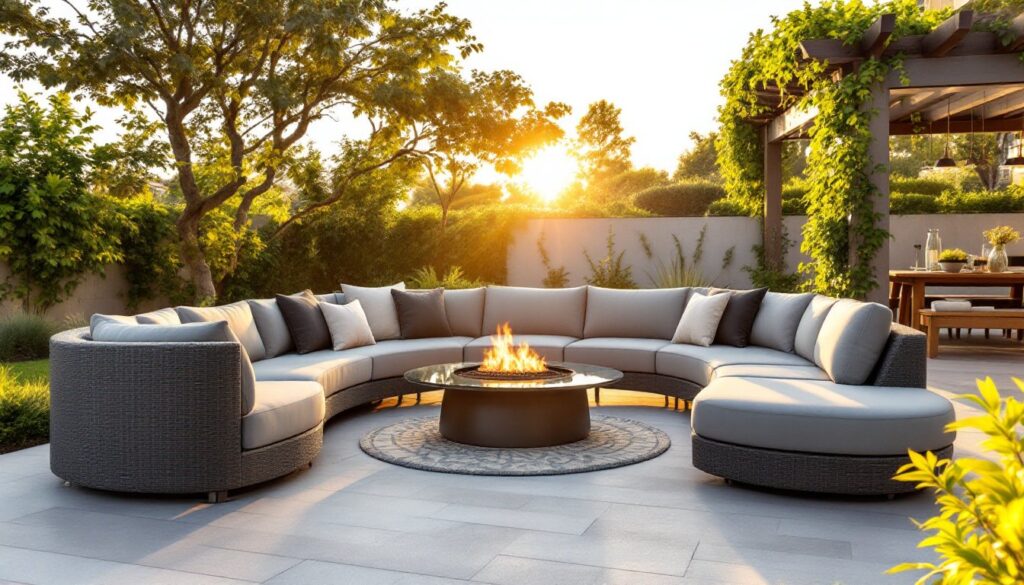
Curved sofas and sectionals come in two main flavors: modular and fixed. Modular curved pieces (sometimes called curved chaise lounges or curved seating modules) are individual units you can arrange and rearrange. Fixed curved sectionals are one solid frame, more stable and durable, but less flexible if you rearrange often. Both work outdoors, though fixed pieces tend to be heavier and more weather-resistant since there are fewer connection points to corrode or loosen.
Material choices matter enormously. Resin wicker over aluminum frames is popular because it mimics natural wicker’s look while resisting UV fade and moisture. Teak or cedar wood curved frames offer a premium, traditional aesthetic but require regular sealing to prevent rot. Curved all-weather wicker armchairs woven from recycled synthetic fibers combine durability with sustainability. Cushions should be outdoor-grade fabrics (acrylic-based) that shed water and resist mildew, not indoor upholstery that’ll rot if left in damp conditions.
For layout, curved sectionals typically measure between 84 and 120 inches on the arc (the outer edge), depending on whether you want a gentle curve or a dramatic wrap-around. Check your patio dimensions before ordering, curved pieces look undersized or cramped in wrong-sized spaces.
Curved Dining Sets and Benches
Curved dining benches are the unsung heroes of outdoor entertaining. A curved bench along one side of the table seats more people comfortably than individual chairs and lets you tuck the table closer to a railing or garden edge. They’re especially practical for long, narrow patios where traditional seating arrangements feel clunky.
Curved outdoor dining tables are less common but increasingly available. These work best with a mix of curved benches and individual chairs rather than trying to seat everyone on curves. Standard outdoor dining table heights are 30 inches: benches should sit about 18 inches high for comfortable knee clearance. A curved table measuring 60 inches across the widest point comfortably seats six to eight people, though you’ll lose a couple seats compared to a rectangular table of the same footprint.
Materials for curved dining furniture skew toward weather-resistant wood (teak, acacia, eucalyptus) or powder-coated aluminum with high-end cushions. Park Home Furniture: Unlock offers space-conscious outdoor dining solutions that incorporate curves without consuming your entire deck.
How to Choose the Right Curved Patio Furniture for Your Space
Start with honest measurements. Grab a measuring tape and sketch your patio layout to scale, or better yet, use painter’s tape to outline furniture dimensions on the actual deck. Curved pieces visually occupy more space than their linear measurements suggest, so this step prevents expensive returns. Consider traffic flow: you need at least 36 inches of walking space between furniture and railings or garden beds.
Next, think about permanence. If you move frequently or like rearranging, modular curved seating wins. If you’re settling in and want maximum stability, a fixed curved sectional pays dividends in durability and weather resistance. Match the furniture style to your home’s exterior, modern curved pieces in sleek aluminum feel out of place next to rustic wood siding, just as ornate wrought-iron curves clash with minimalist architecture.
Weather exposure matters more than most DIYers realize. South-facing patios get hammered by UV light: prioritize fade-resistant fabrics and consider a shade structure (pergola, umbrella, or awning). If your patio gets waterlogged after rain or stays damp, avoid untreated wood and opt for wicker or metal frames with moisture-wicking cushion cores. Country Living regularly features outdoor decor solutions suited to various climates and regions.
Budget realistically. Entry-level curved sectionals (resin wicker on aluminum) run $800–$1,500 for a decent-sized piece. Mid-range teak sectionals hit $2,500–$4,500. Premium custom curved pieces can exceed $6,000. These aren’t small investments, so buy what you can commit to maintaining. Cheaper options often have thin cushion cores that compress quickly or wicker that cracks in freeze-thaw cycles. Don’t cheap out on a curved sofa that’ll sit outdoors full-time.
Care and Maintenance Tips for Long-Lasting Outdoor Pieces
Maintenance is the difference between furniture that lasts five years and furniture that lasts twenty. Start with prep: if you’re installing a new curved sectional, wipe down all surfaces with a damp microfiber cloth before the first use. This removes factory dust and prevents dirt from binding to cushion fabric.
For wicker and resin furniture, a gentle scrub with mild soap and a soft-bristle brush twice a year keeps mildew and grime at bay. Don’t use a pressure washer, the force pushes water into frame joints and accelerates rot. Rinse thoroughly with a garden hose and air-dry completely before storing or covering. Ana White has excellent tutorials on DIY outdoor furniture care and seasonal maintenance routines.
Cushion management is critical. Use outdoor furniture covers or store cushions indoors during off-season or extended wet periods. If your cushions stay outside year-round, flip and rotate them monthly to prevent uneven compression and mold growth. Most outdoor cushion cores are high-density foam wrapped in moisture-wicking fabric, but they still trap water if left face-down in puddles. Consider a breathable storage box for cushions instead of plastic bags, which trap condensation.
Wood pieces require seasonal sealing, typically every 12–18 months depending on your climate. Use exterior-grade sealant or oil formulated for the specific wood type (teak, cedar, etc.). Sand lightly before resealing to open the grain and improve adhesion. If you spot rot or soft spots, address them immediately: wood rot spreads fast.
For metal frames, inspect welds and connection points yearly. Corrosion starts in hidden areas where moisture collects. A light spray of rust preventative oil on aluminum or galvanized steel after cleaning helps. If rust appears, sand the spot, prime, and paint with outdoor metal paint, don’t ignore it.
Conclusion
Curved patio furniture transforms outdoor spaces by combining smart function with modern style. The key to a successful purchase is matching the furniture’s footprint and materials to your actual climate and lifestyle, not just Pinterest aspirations. Invest in quality cushions and frames, measure carefully before buying, and commit to seasonal maintenance. A well-chosen curved sectional or dining set will anchor your outdoor living for years and genuinely get used, making it money well spent.