




Table of Contents
ToggleA solid wood bedroom set isn’t just a trend, it’s an investment that can outlast years of cheaper alternatives. Unlike veneered or particleboard furniture, natural wood bedroom furniture develops character as it ages, resisting the cheap wobble and visible damage that plague mass-produced pieces. Whether you’re furnishing a new home or upgrading your current bedroom, understanding wood types, construction quality, and care fundamentals helps you avoid costly mistakes. This guide walks you through selecting, styling, and maintaining natural wood furniture so you end up with pieces your kids might actually want to keep.
Key Takeaways
- Natural wood bedroom furniture sets outlast cheaper alternatives by decades, with solid wood pieces remaining durable for 30+ years compared to particleboard that often fails within five years.
- Hardwoods like oak, cherry, and walnut offer superior durability and refinishing potential, while softwoods like pine work best for painted cottage styles but dent more easily.
- Quality construction is defined by mortise-and-tenon joinery, full-extension drawers with ball-bearing rollers, and solid wood frames rather than veneer-wrapped particleboard.
- Matching wood tones and coordinating styles—such as pairing mid-century modern lines with light ash or farmhouse aesthetics with white oak—creates a cohesive bedroom design.
- Regular dust and moisture control, UV protection, and immediate spill cleanup preserve the finish and prevent warping in natural wood furniture for long-term beauty and functionality.
Why Natural Wood Bedroom Furniture Is Worth the Investment
Real wood furniture costs more upfront, but the math changes when you consider lifespan and durability. A solid wood nightstand built with mortise-and-tenon joinery holds up for decades: a particleboard equivalent often delamcinates within five years. Natural wood also resists the cosmetic damage that shows on lightweight pieces, minor scratches can be sanded and refinished rather than requiring the whole item to be replaced.
Beyond longevity, solid wood adapts to your space. You can strip it, restain it, or refinish it entirely as your style evolves. Try that with glued-on veneer. Resale value matters too: homes staged with quality wood bedroom furniture consistently fetch better offers than those with particle-board alternatives. The environmental argument holds water as well, buying one solid wood bed that lasts 30 years beats disposing of three cheap ones in the landfill.
Types of Natural Wood Used in Bedroom Furniture
Not all wood is created equal. The species you choose affects durability, appearance, weight, and cost, and understanding the difference prevents buyer’s remorse.
Hardwoods vs. Softwoods: What’s the Difference?
Hardwoods come from deciduous trees (oak, maple, cherry, walnut) and are denser and harder than softwoods (pine, fir, cedar), which come from conifers. Even though the names, some “softwoods” are actually tougher than soft hardwoods, the classification refers to the tree type, not wood density.
Hardwoods like red oak and white oak are prized for bedroom furniture because they resist denting and scratching better than softwoods. They take stain evenly and hold finishes longer. Cherry wood is warm and matures beautifully, darkening over time. Walnut offers rich, dark grain and is stable enough for quality case goods like dressers and headboards. These command higher prices but justify the cost through durability.
Softwoods like pine are lighter and less expensive, making them popular for painted bedroom furniture. Pine works well when painted solid colors and offers a farmhouse or cottage aesthetic. But, pine dents and scratches more easily and isn’t ideal if you prefer natural wood finishes. Pine used in bedframes can also sag under load if the joinery isn’t substantial.
Engineered combinations blend solid wood frames and rails with veneer panels on larger surfaces like headboards and drawer fronts. This approach stabilizes large panels (reducing warping) while reducing cost. Legitimate veneer over solid wood is actually superior to cheaper particleboard alternatives, though inferior to fully solid construction.
Key Features to Look For in Quality Bedroom Furniture Sets
A few inspection points separate quality pieces from disposable furniture. Look for solid wood construction on structural parts, the frame, legs, and drawer sides should all be real wood, not veneer-wrapped particleboard. Run your hand under a dresser or nightstand: if it feels like plastic or lightweight composite, it’s not solid wood.
Joinery matters enormously. Mortise-and-tenon joints (where a projecting piece fits into a hollow opening and is glued) are the gold standard for bedframes and case goods. Dovetail joints on drawer fronts and sides indicate craftsmanship and longevity. Avoid furniture held together primarily with staples, nails, or metal brackets, these wear out quickly.
Drawer construction tells you a lot. Full-extension drawers with solid wood slides and ball-bearing rollers glide smoothly and last decades. Particleboard bottoms are acceptable if the sides and front are solid wood. Check that drawer boxes are actually joined, not just stapled. A dresser with quality dovetail-jointed drawers and a solid wood frame costs more but won’t become a pain to use in five years.
Finish quality also signals durability. A properly applied hard wax oil or catalyzed lacquer resists moisture and minor damage better than thin stain or wipe-on finishes. Ask whether the finish is food-safe for pieces that might hold lotions or jewelry, some lacquers and stains contain questionable chemicals.
Stability and weight are underrated. Solid wood furniture is heavy because it’s, well, solid. If a dresser feels light as cardboard, it’s not solid wood. Similarly, check for construction that prevents racking (the frame twisting out of square). A well-built bedframe won’t shake when you move around at night.
How to Match Natural Wood Furniture With Your Bedroom Style
Not all wood tones and styles live well together. Here’s how to make your natural wood bedroom set feel intentional rather than mismatched.
Matching wood tones is your first decision. A bedroom with cherry nightstands and a walnut dresser reads chaotic: sticking to one species or closely related tones (say, light oak and natural cherry) creates visual coherence. If you’re adding pieces gradually, buy from the same maker when possible, they’ll use the same wood and stain recipe.
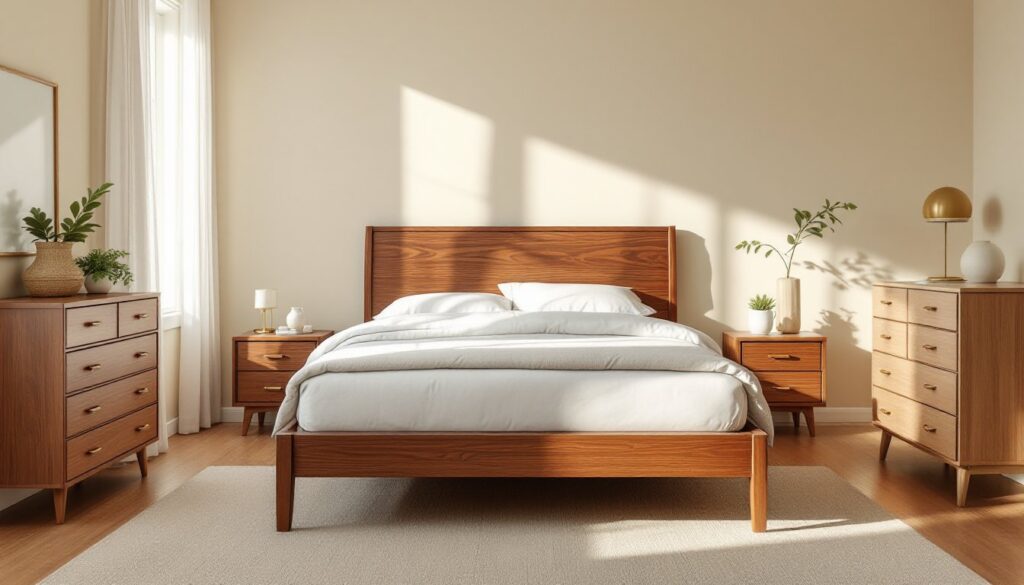
Style personality matters too. Mid-century modern bedroom sets emphasize clean lines and tapered legs in lighter woods like ash or light walnut. Farmhouse and cottage styles lean into pine or white oak, often painted white or left natural with distressing. Contemporary designs feature slab fronts and minimal ornamentation in darker woods like walnut or espresso-stained oak. Transitional pieces (blending traditional and modern) work in almost any bedroom but are often done in medium-brown hardwoods with subtle detailing.
Grain and figure affect mood. Oak has pronounced, open grain that reads rustic and casual. Walnut’s tighter grain and dark color feel formal. Maple is fine-grained and neutral, working well as a backdrop. If your bedroom is small, lighter woods (ash, birch, light oak) make the space feel airier. Darker woods (walnut, cherry) add intimacy to larger rooms.
Research shows that homeowners who source modern bedroom design inspiration alongside their furniture selections create more cohesive rooms. Pairing your wood choices with bedding, lighting, and wall color, not just grabbing whatever desk matches, lifts the entire design. Consider whether your wood furniture feels at home with your existing bed frame, nightstands, and storage, or if a full set replacement makes more sense.
Caring for Natural Wood Bedroom Furniture
Solid wood bedroom furniture demands regular but simple maintenance, neglect accelerates aging and damage.
Dust regularly with a soft, lint-free cloth. Use the grain direction, not against it: this prevents fine scratches from accumulating. Monthly, use a wood-specific cleaner or a damp cloth wrung out so it’s barely moist (excess water and wood don’t mix). Dry immediately with a clean cloth. Avoid furniture polishes with silicone: they build up over time and gum up the finish.
Control humidity and temperature to prevent warping and checking (fine cracks in the wood). Bedrooms should ideally stay between 35–50% humidity year-round. In dry climates (especially winter with heating), use a humidifier. In humid climates, air conditioning helps. Avoid placing wood furniture directly against exterior walls where temperature swings are extreme, and keep it away from heating vents and air conditioning ducts.
Protect from sunlight and heat. Direct UV rays fade wood over time, and intense heat dries it out, leading to warping. Use curtains or blinds to filter sunlight, and never place a wood dresser directly in front of a sunny window. Keep nightstands and dressers away from radiators, space heaters, and heat lamps.
Address spills immediately. Water rings form if you leave a wet glass on a wood nightstand, wipe spills right away. For stubborn water marks, try a tiny dab of white vinegar on a cloth, then dry thoroughly. For sticky spots (nail polish, melted candle), use a plastic scraper and gentle rubbing, then clean the area.
Minor scratches and dents can be addressed with wood filler sticks matching your finish, sanding (if shallow), or professional restoration for deeper damage. Many homeowners find that owning quality wood furniture justifies spending a bit on professional refinishing when needed, far cheaper than replacing the piece. If you’re comfortable with basic finishes, DIY furniture restoration guides walk through refinishing a dresser or headboard, though this is a weekend commitment, not a quick touch-up.
Conclusion
Choosing natural wood bedroom furniture is choosing durability and timelessness over convenience and cost-cutting. By understanding wood types, assessing quality construction, matching style cohesively, and maintaining pieces properly, you end up with a bedroom that feels grounded and looks better year after year. These aren’t pieces you’ll replace every five years, they’re furniture that adapts with you.