



Table of Contents
ToggleBeach house living room furniture isn’t just about picking pretty pieces, it’s about creating a durable, functional space that withstands salt air, humidity, and sand tracked in from the shoreline. Whether you’re furnishing a permanent coastal home or a seasonal retreat, the right furniture transforms your living room into a relaxed gathering space that captures that beachy, breezy feeling while standing up to the unique challenges of seaside living. This guide walks you through the essentials: understanding coastal design principles, selecting pieces built to last in salty environments, and arranging them so your beach house living room feels both inviting and practical. Let’s build your ideal coastal sanctuary.
Key Takeaways
- Beach house living room furniture must prioritize durability and moisture resistance, with performance fabrics like Crypton and Sunbrella protecting against salt air, humidity, and sand damage.
- Coastal design succeeds through simplicity and neutral color palettes—whites, soft blues, and weathered grays—layered with natural wood, woven textures, and minimal visual clutter to create an inviting, livable space.
- Choose hardwoods like teak and cedar with marine-grade finishes, avoid particleboard and delicate fabrics like velvet, and opt for removable slipcovers to manage frequent cleaning in seaside environments.
- Arrange seating around a focal point with open sightlines and floating furniture to maximize space, then add greenery, layered lighting, and multi-functional pieces that serve double duty.
- Embrace weathered finishes and imperfection as part of coastal charm—salt-stained wood and faded fabrics are features, not flaws, as your beach house living room naturally patinas over time.
Understanding Beach House Living Room Aesthetics
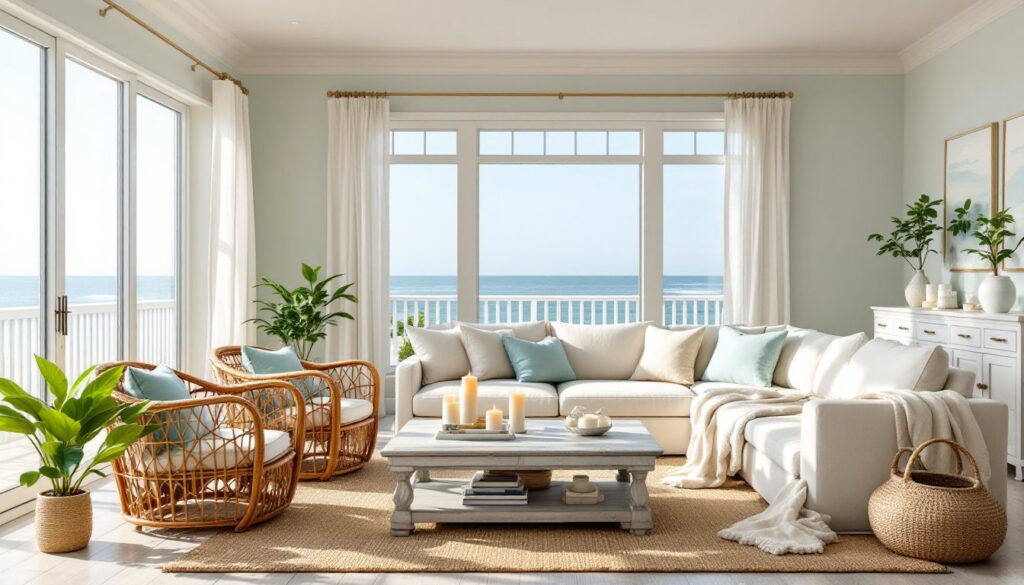
Coastal design is rooted in simplicity and functionality. The best beach house living rooms pull from natural materials, soft neutral palettes, and an open, airy feel that mirrors the ocean and sky. Think whites, soft blues, sandy tans, and weathered grays, colors that echo the shoreline rather than fight it.
The aesthetic balances relaxation with durability. You’ll see linen and natural fiber fabrics, light wood tones, and minimal visual clutter. Unlike traditional interior design, coastal style prioritizes livability: spill-proof fabrics, washable slipcovers, and finishes that tolerate moisture matter more than high-gloss perfection. The goal is a room where guests feel welcome to kick off their shoes, drop onto the sofa without fussing over cushions, and genuinely unwind.
Accessories lean toward function and nostalgia, weathered driftwood, rope accents, nautical artwork, and plants in natural ceramics. But avoid clichéd nautical kitsch. Real beach house style is understated. One excellent source of inspiration is the Serena & Lily and Pacaso decorated beach house, which demonstrates how to layer textures and neutrals without overdoing theme elements. The living rooms shown balance openness with comfort, proving that coastal doesn’t mean sparse or sterile.
Essential Furniture Pieces for Coastal Interiors
Seating Solutions and Sofas
Your sofa is the anchor. In coastal settings, opt for a performance fabric or linen-blend upholstery rated for high traffic and moisture resistance. Brands like Crypton and Sunbrella make textile solutions that resist stains, mildew, and fading, critical in humid, salt-laden air. A light neutral upholstery (whites, creams, soft grays) is traditional, but don’t shy away from soft blues or sand tones if they suit your vision.
Size matters: choose a deep, comfortable sofa (30–32 inches deep) that invites sprawling and relaxation. A sectional works beautifully in open beach house layouts, offering flexible seating and visual continuity. If your living room is smaller, a quality apartment-scale sofa paired with accent chairs gives you flexibility without overwhelming the space.
Accent seating, wicker chairs, linen club chairs, or rattan pieces, complements the main sofa and bridges indoor-outdoor flow if you have a patio or deck adjacent to the living room. Layer in removable, washable slipcovers whenever possible: salt air and sand mean frequent cleaning is part of beach house life, and slipcovers let you rotate fabrics seasonally or quickly refresh if stains happen.
Tables and Storage Options
Coffee tables and side tables should be built for durability and easy cleaning. Reclaimed wood, metal-frame tables, or natural stone tops resist warping in humidity and don’t show dust or salt residue like glass does. A solid wood coffee table in a weathered finish or driftwood gray becomes a focal point without looking precious, it invites use rather than discouraging it.
Storage is crucial in beach houses, where sand, towels, beach toys, and seasonal decor accumulate. Low-profile wooden credenzas or sideboard cabinets stash items while maintaining the open aesthetic: choose pieces with clean lines and light finishes. Woven baskets under tables or beside seating corral throws, pillows, and guest items stylishly. Open shelving in natural wood works if you keep it tidy: reserve closed storage for less-photogenic necessities.
Nesting tables or compact side tables work well in tight layouts and adapt to different seating arrangements. Avoid glass tops in primary gathering spaces, they require constant wiping in a coastal environment.
Materials and Durability for Coastal Climates
Salt air corrodes and fades. That’s not pessimism, it’s physics. Choose materials thoughtfully from the start, and your beach house furniture will age gracefully rather than deteriorate.
Hardwoods like teak, mahogany, and cedar resist rot and salt naturally: they’re excellent for investment pieces. Engineered wood or plywood with sealed finishes works for budget-conscious buys but requires more maintenance. Avoid particleboard or veneered pieces in primary living spaces, humidity causes swelling and delamination. Stain or finish hardwood pieces with marine-grade poly or varnish for extra protection.
Upholstery fabrics must resist moisture, mildew, and UV fading. Performance synthetics (polyester blends, olefin) and outdoor-rated linens excel here. Natural linen is beautiful but demands more care: if you choose it, ensure tight weaves and UV-resistant treatments. Avoid velvet, chenille, or loose weaves in humid, sandy environments.
Metal accents, brass, stainless steel, aluminum, should be powder-coated or stainless to resist salt corrosion. Wrought iron rusts quickly in coastal air. Wicker and rattan, if treated with marine-grade sealant, age beautifully: untreated versions absorb moisture and become breeding grounds for mildew.
For flooring and wall finishes in adjacent areas, consider low-VOC paints with mildew-resistant additives. Sand and salt settle everywhere, so choose finishes that tolerate frequent damp cleaning without breaking down. When selecting pieces from sources like Union Home Furniture, verify material specs and ask about coastal-suitable construction.
Design Tips for Creating Your Ideal Beach Retreat
Start with a clear layout that prioritizes sightlines and natural light. Beach houses thrive on openness: avoid a furniture maze. Arrange seating around a focal point, a fireplace, water view, or accent wall, rather than scattering pieces throughout. Floating furniture away from walls actually makes small rooms feel larger and more livable.
Color and texture are your best tools. Layer soft, neutral upholstery with natural wood, woven textures, and a few standout accent pieces in seafoam, driftwood gray, or warm sand tones. Throw in greenery, potted palms, fiddle-leaf figs, or trailing vines, to soften corners and echo the outdoor environment. Textiles matter: a chunky linen throw, jute rug, and linen curtains create depth without visual chaos.
Lighting transforms a beach room. Natural light is king, so keep window treatments minimal, sheer linen panels or bamboo shades filter harsh sun without blocking views. For evening ambiance, layer ambient lighting (flush mounts or subtle fixtures) with table lamps and, if budget allows, a dimmer switch. Candles in hurricane glasses add warmth and safety from salt-air drafts.
Multi-functional pieces maximize small beach houses. An ottoman with hidden storage, a sofa bed for guest overflow, or nested tables adapt to shifting needs. Resist the urge to fill every corner: negative space is part of coastal design’s appeal. Resources like Design Milk showcase contemporary coastal interiors that prove less is more. When sourcing from retailers like Home Decorators Furniture, prioritize pieces that serve double duty and align with your neutral, durable aesthetic.
Finally, embrace imperfection. Coastal style ages in. Weathered wood, faded fabrics, and salt-stained finishes aren’t flaws, they’re part of the charm. Choose pieces you don’t mind living with as they naturally patina and soften over seasons of beach house enjoyment.
Conclusion
Beach house living room furniture succeeds when it balances beauty with practicality. Durable materials, moisture-resistant fabrics, simple styling, and smart storage transform a seaside space into a genuine retreat. Start with a quality sofa in performance fabric, add weathered wood tables and natural seating accents, and layer in textures that evoke sand and sea. Your beach house living room will become the place everyone wants to gather, and it’ll look better for it.