



Table of Contents
ToggleBuilding a cottage bedroom that actually works for your space and budget doesn’t require expensive designers or Pinterest perfection, it requires knowing what cottage style actually means and then choosing furniture pieces that fit your lifestyle. Whether you’re renovating a bedroom in a farmhouse, updating a cabin, or bringing cottage charm to an urban apartment, cottage bedroom furniture blends practical craftsmanship with a timeless aesthetic that feels lived-in and welcoming. This guide walks you through selecting, sourcing, and even building cottage pieces that won’t blow your budget or your sanity. We’ll cover the key furniture styles that define cottage design, show you how to layer materials and colors authentically, and give you real strategies for making it work in real bedrooms, not magazine spreads.
Key Takeaways
- Cottage bedroom furniture prioritizes honest craftsmanship, mixed wood tones, and functionality over perfection, blending practical storage with a timeless, lived-in aesthetic.
- Essential cottage bedroom furniture pieces include solid wood bed frames, nightstands with drawers, and dressers with deep storage that showcase wood grain and construction details rather than hide them.
- Authentic cottage design uses a restrained color palette of natural wood tones, soft whites, muted greens, and dusty blues, paired with natural linens like cotton and linen for bedding.
- Budget-friendly DIY cottage furniture projects like bed frames and dresser refinishing are achievable with basic tools and materials costing $80–150, and thrift store finds can be transformed with chalk paint and new hardware.
- Proper layout and multi-functional storage—including under-bed drawers, nightstand cabinets, and blanket chests—are non-negotiable in cottage bedroom design to maximize purpose and minimize clutter.
- Simple window treatments using natural cotton curtains or linen drapes, paired with practical roller shades, maintain the cottage aesthetic while allowing light control without appearing modern or closed-off.
Understanding Cottage Bedroom Style
Cottage bedroom style isn’t about shabby-chic pastels or overly distressed surfaces. Instead, it draws from practical farmhouse and European country traditions where furniture was built to last generations and materials aged naturally over time.
The core of cottage design centers on honest craftsmanship, mixed wood tones, and a comfort-first mentality. Unlike minimalist or modern industrial bedrooms, cottage spaces embrace visible wood grain, slightly imperfect finishes, and the patina of real use. A cottage bedroom invites you to actually sleep there and sprawl across the bedspread without worrying about perfection.
This style also values functionality. Cottage furniture typically has built-in storage, think nightstands with drawers, beds with storage underneath, dressers with deep drawers for linens. The aesthetic celebrates the joints, the wood species variations, and the construction details that make pieces work, not hide them.
When you’re shopping for or building cottage furniture, ask yourself: Would this piece sit comfortably in a 1920s farmhouse? Does it solve a storage or comfort problem, or is it purely decorative? That’s the cottage mindset.
Essential Cottage Bedroom Furniture Pieces
Beds and Bed Frames
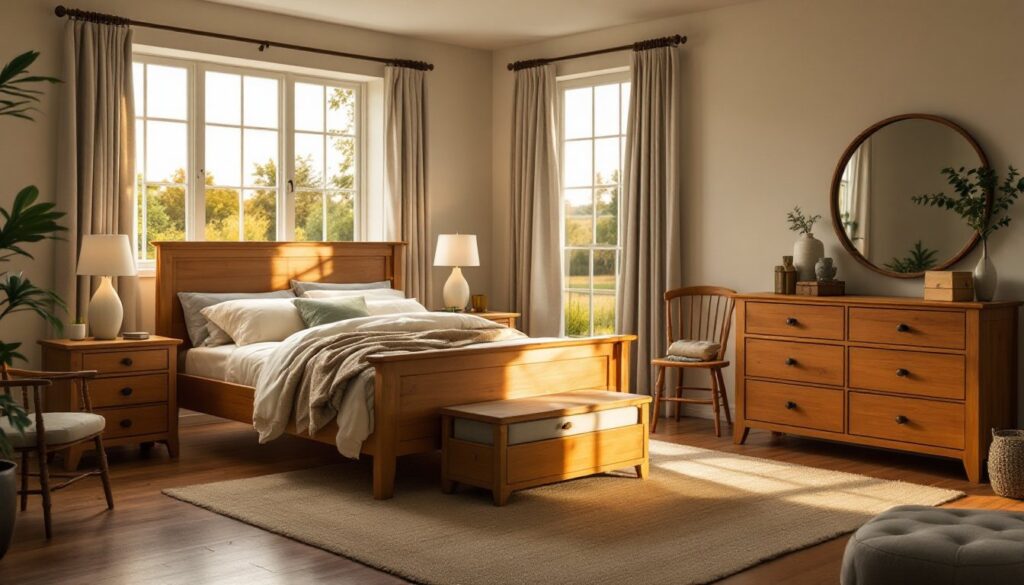
The bed is the anchor of any bedroom, and in cottage style, it’s often the statement piece. A solid wood bed frame, typically made from pine, oak, or reclaimed timber, sets the tone immediately. Cottage bed frames typically feature simple joinery, visible wood construction, and panel details rather than sleek metal or upholstered frames.
For a true cottage feel, consider beds with a headboard that shows off the wood: low-profile frames that sit close to the floor: or even a raised platform bed that offers under-bed storage for off-season linens. Queen and full sizes dominate cottage bedrooms because they’re practical for actual sleeping and partner-sharing, not just styling.
If you’re building your own bed, resources like Ana White’s cottage bed plans provide step-by-step plans for full-size loft cottage beds with shutters and storage. You’ll need a miter saw to cut clean 45-degree angles on trim, 2×6 or 2×8 lumber for frame joinery, and pocket-hole joinery (a Kreg Jig makes this significantly faster and stronger than dowels). Budget 20–30 hours for assembly if this is your first woodworking project: experienced builders can finish in a weekend.
Mattress choice matters too. A firm to medium-firm mattress (6–8 inches thick is typical) paired with quality cotton sheets and a quilted coverlet is more cottage than a flushly padded pillow-top.
Nightstands and Dressers
Cottage nightstands aren’t floating shelves, they’re proper furniture with legs, drawers, and weight. Look for pieces with tapered or turned legs, one or two deep drawers for storing books and reading glasses, and an open shelf or lower drawer for extra storage. Pine or mixed-wood nightstands, especially those with a natural finish or subtle stain, anchor the bedside without feeling modern or minimalist.
A pair of matching nightstands (or even intentionally mismatched vintage finds) flanking the bed is classic cottage. If you’re short on space, a single nightstand on the dominant side works, but don’t skip it entirely, cottage design values functionality, and a nightstand holds a lamp, a book, and a glass of water.
Dressers should prioritize storage depth and drawer quality over decorative details. A 4–6 drawer dresser in natural wood or painted cottage white provides real utility. Look for dovetail joinery (visible on drawer joints, a sign of solid construction) and smooth, wood-glide drawer slides. The top of the dresser becomes a styling surface: a mirror, a table lamp, and a few small storage boxes keep it from looking cluttered.
Consider dressers with a bit of height variation, a tall dresser-and-mirror combo paired with a lower, wider dresser creates visual interest without looking staged. Painted finishes (soft whites, greens, or blues) are common in cottage design, though natural stain is equally authentic.
Choosing Colors and Materials for Authentic Cottage Design
Cottage color palettes grow from the materials themselves: natural wood tones, soft whites, muted greens, dusty blues, and warm creams. The key is restraint, pick two or three primary colors and stick with them.
Wood is the hero material in cottage bedrooms. Pine is traditional and affordable: oak brings grain and durability: walnut adds warmth but costs more. Reclaimed barn wood or distressed finishes appeal to cottage lovers, but be honest about your budget and maintenance tolerance. Real distressing takes time or money: faux distressing can look cheesy if overdone.
Painted finishes deserve a note: cottage white is not blinding white but a warmer, slightly off-white (think Benjamin Moore’s “Cloud White” or “Ivory White,” not pure #FFFFFF). Use primer before painting, cottage furniture typically gets two coats of quality latex or chalk paint. Avoid high-gloss finishes: satin or matte reads more authentic.
Linens ground the cottage aesthetic. Natural cotton, linen, and cotton-linen blends in cream, white, light gray, or muted pastels work better than synthetic fabrics. A quilted cotton coverlet or a simple woven throw adds texture without kitsch. Layer bedding with a fitted sheet, flat sheet, and coverlet, authentic cottage doesn’t mean minimal: it means purposeful.
Accents like wood-turned spindles on chairs, ceramic hardware on drawers, and simple metal hinges feel cottage-appropriate. Avoid chrome, glass, or anything too shiny. Cottage bedroom inspiration resources showcase how to layer these materials without overwhelming a space.
Layout and Space Planning Tips
Cottage style works in small bedrooms, large bedrooms, and apartments, the key is intentional layout, not square footage. Start by placing the bed against the largest wall, ideally with a nightstand on each side and enough walking space (at least 2 feet) from foot to door or other furniture.
Dressers typically go perpendicular to the bed or against the wall opposite. A wall-mounted shelf or a small bench at the foot of the bed adds storage and seating without crowding. Avoid pushing everything to walls: cottage rooms benefit from furniture that breathes and has purpose rather than filler arrangements.
Windows matter. Cottage bedrooms typically favor simple cotton curtains or linen drapes in neutral tones over blackout shades. If you need light control, hang curtains from a simple rod (wood or metal) and add a roller shade behind for practicality. Natural light softening through fabric is more cottage than closed-off darkness.
Storage is non-negotiable in cottage design. Under-bed drawers, dresser depth, nightstand cabinets, and even a small blanket chest at the foot all support the cottage ethos of purposeful furniture. One misplaced decorative item feels lazy: one purposeful storage box feels intentional.
For apartments or small bedrooms, consider a dresser-and-mirror combo unit instead of separate pieces, or a bed with built-in drawers underneath. These multi-functional choices align with cottage roots, furniture worked harder because spaces were smaller and resources were limited.
Budget-Friendly DIY Approaches to Cottage Furniture
Building your own cottage furniture saves money and gives you control over materials and finishes. A simple wooden bed frame, basic nightstands, or a dresser with turned legs are intermediate woodworking projects, not beginner-level, but absolutely achievable with hand tools or basic power tools.
Start with a clear design and accurate measurements. A queen bed frame is 60 inches wide by 80 inches long (these are actual, not nominal dimensions). Nightstands are typically 28–30 inches tall, 18–24 inches wide, and 15–18 inches deep. Use 2×6 lumber (actual dimensions 1.5″ × 5.5″) for bed frame joinery: it’s affordable and strong enough for typical loads. Pocket-hole joinery with a Kreg Jig simplifies construction and eliminates visible fasteners.
For finishing, invest in quality wood stain (water-based or oil-based, oil gives richer color but requires ventilation) and polyurethane topcoat (3–4 coats for durability). A satin finish is more cottage than gloss. Budget $80–150 in materials for a basic queen bed frame: twice that if you add a headboard or storage drawers.
Alternatively, source unfinished wooden furniture blanks online or locally (bedside tables, dresser bodies, shelves) and finish them yourself. A coat of chalk paint, sanding the edges lightly for a worn look, and new hardware transforms cheap pieces into cottage-style furniture in a weekend.
Thrift stores and online marketplaces like Facebook Marketplace or Craigslist are goldmines for solid wood furniture that needs refinishing. An old oak dresser costs $40–80 and becomes stunning after stripping, staining, and new hardware. Beginner tutorials from The Handyman’s Daughter and similar sites walk through sanding, staining, and reassembling vintage pieces step-by-step.
When renovating existing furniture, wear a dust mask (N95 rated minimum) when sanding, goggles for stain application, and gloves for finish work. Sand with 120–150 grit paper to remove old finish, then 220 grit for smoothness before staining. Don’t rush this step: poor prep guarantees a poor finish.
For painted cottage furniture, use a primer designed for wood (Zinsser BIN or Kilz Original block stains and odors). Two coats of satin latex paint ($20–30 total) complete the look. Avoid high-gloss enamel: it reads modern, not cottage. If you want a deliberately worn, distressed look, use 150-grit paper on paint edges after it dries, but moderation matters. Heavy distressing looks costume-like: subtle distressing looks genuine.