

Table of Contents
ToggleFarmhouse bedroom furniture brings warmth and authenticity to any sleeping space without requiring a complete renovation. This design style combines weathered wood, neutral tones, and functional pieces that feel both lived-in and inviting. Whether you’re starting from scratch or refreshing an existing bedroom, farmhouse furniture offers a practical approach to creating a comfortable retreat. The beauty of this aesthetic is that it works with existing collections and budget constraints, you don’t need a designer’s eye or a contractor’s budget to pull it off.
Key Takeaways
- Farmhouse bedroom furniture prioritizes solid wood construction, honest finishes, and functional design over trendy mass-produced pieces, making it an authentic and budget-friendly style choice.
- Essential anchor pieces—a quality bed frame, nightstands, and a dresser—establish the farmhouse aesthetic immediately without requiring a complete matching suite.
- Mixing old and new furniture works beautifully in farmhouse bedrooms when you maintain consistent color palettes, wood tones, and hardware finishes while embracing the accumulated-over-time aesthetic.
- Paint transformations and DIY projects make farmhouse bedroom furniture accessible on a tight budget, with thrifted solid wood pieces and simple hardware swaps delivering dramatic style upgrades for minimal cost.
- Texture layering through painted finishes, natural wood accents, linens, and woven baskets prevents farmhouse bedrooms from feeling flat and creates the lived-in, inviting character that defines this design style.
What Defines Farmhouse Bedroom Furniture
Farmhouse bedroom furniture is rooted in practical design that prioritizes function over flash. The style draws from rural, countryside aesthetics, think reclaimed barn wood, simple construction, and finishes that show wear naturally. Unlike modern minimalism, farmhouse pieces often feature visible joinery, turned legs, and curved details that add character without excess ornamentation. The goal is furniture that looks like it’s been passed down rather than mass-produced for this season’s trend.
The farmhouse approach rejects plastic veneers, high-gloss finishes, and overly engineered frames. Instead, you’ll find solid wood construction (or convincing reproductions of it), visible hardware like wrought-iron handles, and a color palette anchored by whites, creams, blacks, and warm grays. Textures matter too, linen, cotton, burlap, and unfinished wood are standards. This furniture works because it’s honest: it’s built to be used, repaired, and passed along.
Key Wood Types And Finishes
Farmhouse furniture typically relies on specific wood species and finishing techniques that establish its signature look. Pine, oak, and hickory are traditional choices because they’re affordable, durable, and take stain and paint predictably. These hardwoods also show grain character that softwoods like particleboard simply can’t match. Many pieces are also made with reclaimed wood or rustic veneers that mimic aged characteristics, distressing, hand-planing marks, and knots are features, not flaws.
Finishes fall into two camps: painted and stained. Painted farmhouse furniture often uses chalk paint or flat latex finishes in whites, soft grays, or muted earth tones like sage or mustard. The finish is typically distressed, sanded at corners and edges to expose wood underneath, which creates the impression of age and use. Stained pieces showcase wood grain and lean toward golden honey, medium walnut, or whitewashed finishes that lighten the wood without completely obscuring its character. A low-sheen or matte topcoat (satin at most) keeps the rustic feel: high gloss looks too modern and breaks the aesthetic.
Essential Furniture Pieces For A Farmhouse Bedroom
A farmhouse bedroom doesn’t require a full matching suite, but certain anchor pieces establish the style immediately. Start with the bed, it’s the focal point and sets the tone for everything else. Anchor it with a nightstand or two, add storage via a dresser or chest, and you’ve covered the functional essentials. Everything else is refinement.
Bed Frames And Headboards
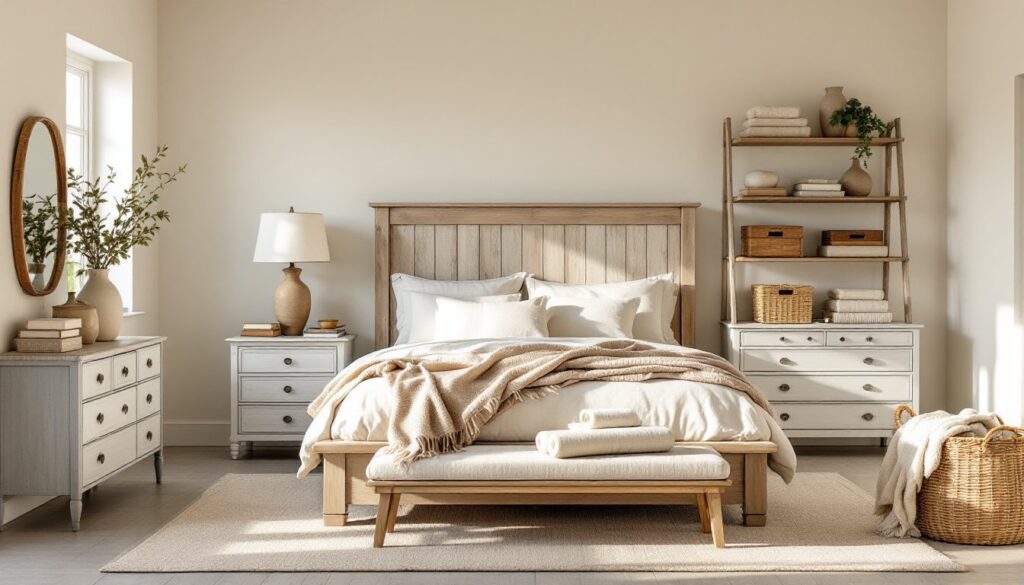
The bed is where farmhouse style either lands or falls flat. Look for solid wood frames with minimal hardware, iron or wrought-metal accents are welcome, but ornate brass or chrome hardware pulls away from the aesthetic. Farmhouse headboards typically feature one of these approaches: reclaimed wood planking arranged in a shiplap or board-and-batten style, a simple wooden frame with turned posts, or an upholstered headboard in linen or canvas with nailhead trim.
Size and proportion matter. A queen-size platform bed or traditional wooden frame with a substantial headboard anchors the room without overwhelming it. If building or refinishing a frame yourself, use construction lumber like 2×12 pine boards for the headboard and 2×6 or 2×8 joists for the frame sides. These nominal sizes (actual dimensions are slightly smaller: a 2×12 is really 1.5″ × 11.25″) are standard and predictable for DIY projects. Finish with primer and two coats of your chosen paint, or sand and stain for a natural look. Distressing comes last, sand edges and high-traffic areas lightly after the finish fully cures.
If buying ready-made, budget $400–$1,200 for a quality wooden farmhouse bed frame, depending on wood type and joinery. Reclaimed or distressed finishes cost more. Upholstered options start around $600 and go up significantly for custom work or higher-end materials.
Nightstands, Dressers, And Storage Solutions
Nightstands anchor the space beside your bed and provide functional storage for lamp, books, and personal items. Farmhouse nightstands are typically single-drawer or open-shelf designs in wood with simple turnings or straight legs. Look for pieces with wrought-iron or wood hardware and avoid chrome or glass tops. A pair of matching nightstands (whether solid wood or painted) creates visual balance: mismatched but complementary pieces also work if they share a similar finish or paint color.
Dressers are workhorses in a farmhouse bedroom. A five-drawer dresser or chest (roughly 30–36″ wide, 18–20″ deep, 48–52″ tall) fits most bedrooms and provides serious storage without dominating the floor plan. The farmhouse aesthetic pairs well with simple hardware and either painted or stained finishes. Open shelving or a low linen cabinet adds texture and breaks up solid wall space. These pieces cost $300–$800 for solid wood, and $150–$400 for well-made reproductions.
Beyond the bed and dresser, a wooden bench at the foot of the bed (sometimes called a blanket chest or storage bench) adds seating, storage, and style, particularly when paired with rolled blankets or woven baskets underneath. These typically run $200–$500 depending on size and materials. Baskets, crates, and open shelving are also key to the farmhouse look: they provide storage while maintaining the informal, lived-in feel. Woven baskets, wooden apple crates, and vintage trunks all work beautifully here.
How To Mix Old And New Pieces For Authentic Charm
The strength of farmhouse design is that it doesn’t demand perfection or matchy-matchy consistency. A room that blends vintage finds, thrifted pieces, and new budget furniture often feels more authentic than one filled with coordinating sets from a single store. The trick is establishing visual coherence without rigid rules.
Start with a consistent color and finish strategy. If you’re painting new pieces, commit to a palette, say, creamy white walls with soft gray furniture and natural wood accents. Then, secondary pieces (a vintage dresser from Grandma’s attic, a new shelf unit from a big-box store) can vary in shade or finish as long as they sit within that general range. Whites, creams, soft grays, and warm naturals all live happily together: clashing happens when you mix them with bright colors or modern high-gloss finishes.
Mix wood tones intentionally. Farmhouse accommodates honey pine, medium walnut, whitewashed oak, and even dark wood in one room, they just need breathing room. Pair a dark walnut dresser with lighter nightstands, or vice versa. Add a natural wood shelf or wooden architectural salvage to tie tones together. The farmhouse aesthetic is forgiving because it’s supposed to look like pieces accumulated over time, not ordered from a catalog.
Hardware is a hidden unifier. Swapping out cheap knobs and pulls on thrifted furniture for consistent wrought-iron or oil-rubbed bronze hardware instantly upgrades the look and creates cohesion. A set of six identical drawer pulls across different pieces signals intentionality, even if the pieces themselves are from different eras and sources. Hardware typically costs $3–$15 per piece, making it a budget-friendly way to unify a room.
Texture is also key. Mix smooth painted finishes with stained wood, soft linens with chunky wool blankets, smooth metal with weathered wood. This variety is what prevents a farmhouse room from feeling flat or sterile. An all-painted room feels incomplete: add a natural wood nightstand, a woven basket, and a vintage metal sign, and it suddenly feels whole.
Budget-Friendly Ways To Build Your Farmhouse Bedroom
Building a farmhouse bedroom on a tight budget is entirely feasible, the style actually rewards resourcefulness and DIY effort. Thrift stores, estate sales, Craigslist, and Facebook Marketplace overflow with affordable pieces that respond beautifully to a coat of paint or hardware swap.
Start by sourcing pieces secondhand. A solid wood dresser or nightstand from a thrift store (typically $30–$100) can be transformed with chalk paint, distressing, and new hardware for a fraction of retail price. Real solid wood is worth seeking out, even if the finish is ugly or damaged, veneer and particleboard don’t age as gracefully. Paint costs are low: a gallon of quality chalk paint covers roughly 300–400 square feet and runs $25–$40. One gallon easily refinishes multiple pieces.
Build what you can’t find affordably. A simple wooden bed frame or headboard made from 2×12 pine boards ($2–$5 per linear foot) is a weekend project for anyone comfortable with a miter saw, drill, and stain. Plywood shiplap (using 3/8″ plywood ripped into boards) costs far less than reclaimed wood and achieves the same visual impact when painted. Ana White offers free DIY furniture plans including farmhouse beds and headboards with step-by-step instructions.
Reclaimed and salvage materials add authentic character affordably. Barn wood, vintage doors, and old windows can be sourced from salvage yards for $0.50–$3 per board foot depending on condition and local availability. An old wooden door or window frame becomes a headboard, wall feature, or architectural accent piece with minimal labor. Hunt for these at local antique malls, salvage yards, and even Facebook Marketplace.
Paint existing furniture instead of replacing it. A nightmare particle-board dresser becomes passable farmhouse furniture under a coat of off-white or soft gray paint. This isn’t a permanent solution, particleboard won’t last as long, but it extends the life of budget pieces while you save for solid wood replacements.
Layering and textile creativity stretch your budget further. Inexpensive muslin, linen-look cotton, and burlap accents (throw pillows, a bed skirt, wall hangings) cost $5–$20 each and establish the farmhouse aesthetic without furniture purchases. A thrifted quilt draped over a footboard, rolled blankets in a basket, and vintage-look bedding create visual interest and comfort at minimal cost. Home Decorators Furniture offers affordable options for those seeking budget-conscious pieces without the thrift hunt. Homedit provides extensive design inspiration when you’re planning your refresh and want to see how pieces work together in real rooms.