


Table of Contents
ToggleChoosing the right patio furniture can make or break an outdoor space. Finch patio furniture has earned its reputation among homeowners for blending quality construction, thoughtful design, and genuine value, without the premium price tag of luxury imports. Whether you’re furnishing a sprawling deck or a compact urban balcony, Finch offers collections that adapt to different styles and climates. This guide walks you through what makes Finch a smart choice, how to pick the right pieces, and the maintenance habits that keep your investment looking sharp year after year.
Key Takeaways
- Finch patio furniture delivers durable quality at mid-range prices ($300–$800 per seating unit) by using weather-resistant hardwoods, reinforced joinery, and solution-dyed acrylic cushions that resist fading and moisture.
- Modern Finch collections feature clean lines and modular designs, while traditional options offer deeper seats and warmer tones in sustainably sourced teak or eucalyptus that age gracefully over time.
- Select Finch pieces based on your space dimensions, sunlight exposure, and climate—with coastal areas favoring aluminum or treated hardwood, and arrangement spacing of 18–24 inches between seats for comfort.
- Rotate and flip cushions monthly, store them indoors during off-season, clean hardwood frames annually with mild soap, and address repairs early since Finch’s parts availability makes maintenance affordable.
- Finch patio furniture’s modularity and replacement parts inventory mean your outdoor space can evolve with your needs without hunting for matching pieces elsewhere.
What Makes Finch Patio Furniture a Smart Choice for Homeowners
Finch patio furniture stands out for a straightforward reason: solid engineering meets practical pricing. Most Finch pieces use weather-resistant hardwoods (like eucalyptus or teak) or aluminum frames with deep-seat cushioning, materials that hold up to moisture, UV exposure, and seasonal temperature swings without requiring constant upkeep.
The construction details matter. Finch frames typically feature mortise-and-tenon joinery or reinforced welding at stress points, the same techniques used in higher-end pieces. Cushion covers are often made from solution-dyed acrylic, a fabric type that resists fading and sheds water naturally, so mildew doesn’t take hold as quickly.
Another win: inventory. Finch makes enough pieces in each style to replace worn cushions, repair broken slats, or add matching side tables without hunting eBay. This modularity means your patio can grow or shift as your needs change. Sites like Gardenista highlight similar durable outdoor investments that balance aesthetics with realistic maintenance.
Price-wise, you’re looking at mid-range figures, roughly $300 to $800 per seating unit depending on materials and cushion quality. That’s a sweet spot: more durable than big-box imports, less stratospheric than hand-crafted boutique brands.
Popular Finch Patio Furniture Collections and Styles
Modern and Contemporary Collections
Finch’s contemporary line leans into clean lines, minimal ornamentation, and neutral color palettes. Expect tapered aluminum legs, low-slung frames, and that designer aesthetic you see in lifestyle magazines, except these hold up to rain. The Finch Flex series, for example, mixes modular seating with floating side tables: you stack and rearrange sections to suit your deck layout.
Cushion colors in the modern range skew toward charcoal, slate, and ivory, tones that hide dirt and work with any home exterior. Fabrics are typically outdoor-grade solution-dyed acrylic, rated for 500+ hours of direct UV without significant fading. Aluminum pieces are often anodized, meaning they resist corrosion even in salt-air climates.
One practical note: modern designs prioritize clean corners and sleek frames, which can feel less forgiving in high-use areas. Hardwood versions in this style may show scratches faster than rustic options, so if you have kids or pets roughhousing on the patio, this might not be your first pick.
Classic and Traditional Designs
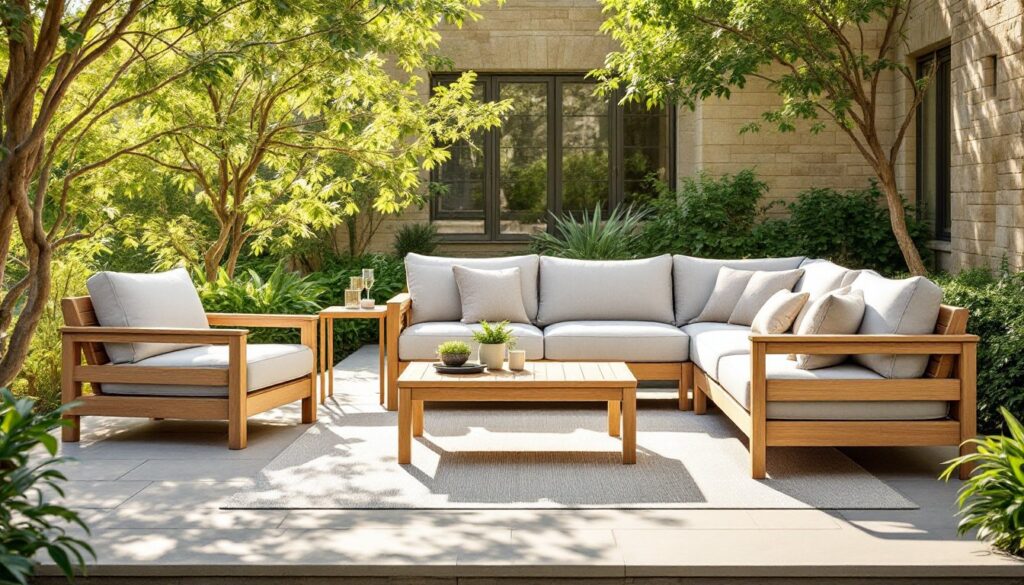
Finch’s traditional collections draw inspiration from teak plantation furniture and Adirondack silhouettes. These pieces rely on curved armrests, wider cushioning, and wood grain as the primary visual accent. Colors are warmer, teak, natural cedar, and cream, which works beautifully against stone or brick.
Hardwood frames in this category are usually sustainably sourced teak or eucalyptus, sealed with UV-protective finishes that darken the wood over time (a patina many homeowners prefer). Traditional designs also tend to have deeper seats and fuller back support, making them comfortable for long evenings without that modern minimalist posture.
The trade-off: these pieces are heavier and require more deliberate placement. You’re not moving a teak sectional around for seasonal rearrangement. But, traditional styling ages gracefully: a classic Finch sofa looks better at year five than year one, as the wood develops character.
How to Select and Arrange Finch Furniture for Your Outdoor Space
Start with your space’s dimensions and sunlight patterns. Measure your patio in feet (not estimates), then note which areas get afternoon sun, these bake faster and degrade lighter fabrics quicker. If your space is smaller than 10 feet × 12 feet, opt for modular or multi-function pieces rather than sprawling sectionals. A compact loveseat with ottoman gives you seating flexibility without eating the entire deck.
Consider your climate. Coastal properties and humid regions favor aluminum or treated hardwoods, since wood swells with moisture and can warp. Dry climates are gentler on wood: even untreated pieces age better inland. Check Finch’s recommendations by collection: they often note whether a style suits specific regions.
Arrangement logic is simple: face seating toward a focal point (a fire pit, water view, or conversation area), leaving 18–24 inches between seat edges for legroom and circulation. Leave at least 2–3 feet from doorways so people can move freely. Resources like Fix This Build That offer layout templates for outdoor spaces that apply equally to furniture placement.
Mix heights and textures to avoid monotony. A solid-seat accent chair paired with a cushioned sofa, for instance, gives visual rhythm. If you’re adding a side table, pick one whose height matches your sofa arm (usually 20–22 inches), functionality beats pure aesthetics.
One more thing: leave gaps. Furniture pushed tight to walls or railings traps moisture underneath. Even teak needs breathing room. A half-inch gap prevents mold and extends cushion life by years.
Maintenance and Care Tips for Long-Lasting Finch Patio Pieces
Cushions are the first casualty if neglected, so flip and rotate them monthly during peak season. This distributes wear and lets bottoms dry if moisture sneaks underneath. At season’s end, store cushions indoors if possible: if you must leave them out, invest in a tight-fitting weather cover, not a loose tarp that traps humidity.
For hardwood frames, clean with a soft brush and mild soap solution each spring. Rinse thoroughly with a garden hose and let dry completely before reapplying finish. Finch pieces typically come pre-sealed, but if you notice graying (oxidation), a UV-protective hardwood sealer (one coat, every 2–3 years) restores color and adds a water-repellent layer. Test any sealer on a hidden spot first: some darken wood more than others.
Aluminum and synthetic wicker pieces are lower-maintenance. A quick wash with soapy water removes pollen and dust. If hard water leaves white stains, white vinegar cuts through mineral deposits without damaging finishes. Dry with a soft cloth to prevent spotting.
Southern Living for regional care tips suited to different climates: humidity in the South, for example, demands more frequent mold checks than dry Western regions.
Address problems early. Loose cushion zippers, cracked wood, or faded fabric are easier (and cheaper) to replace than waiting for structural failure. Finch’s parts availability makes repairs feasible, a worn cushion insert runs $40–80, far less than replacing an entire seat.
Winter storage isn’t mandatory if your area stays mild, but grouping pieces together and covering them extends their life significantly. Most Finch items can withstand snow and ice once, but repeated freeze-thaw cycles stress joints and finishes.
Conclusion
Finch patio furniture delivers the rare combination of durability, design flexibility, and honest pricing that homeowners actually want. By choosing the right collection for your climate, measuring your space, and sticking to basic maintenance, your investment will anchor your outdoor living for a decade or more. Quality outdoor furniture isn’t just decoration, it’s the foundation of how you spend free time at home.