



Table of Contents
ToggleBuilding a modern bedroom starts with choosing furniture that works as hard as it looks. Modern bedroom design emphasizes clean lines, functional storage, and materials that age well, not fleeting trends. Whether you’re refreshing a guest room or overhauling your master suite, the right pieces create a cohesive, restful space. This guide walks you through seven essential furniture categories and how to select them based on your lifestyle, available floor space, and personal style. Skip the guesswork and focus on pieces that earn their place in your room.
Key Takeaways
- A platform bed forms the foundation of modern bedroom design by offering cleaner aesthetics, better support for quality mattresses, and a grounded, spacious feel compared to traditional frame-and-box-spring setups.
- Measure your bedroom carefully and select modern bedroom furniture proportions—including nightstands at 24–28 inches high and dressers at 30–36 inches—to create visual balance and breathing room essential to modern design.
- Mix materials and finishes intentionally, such as pairing a walnut dresser with white oak bed frame and brushed steel nightstands, to achieve a curated look rather than a generic apartment aesthetic.
- Keep nightstands and surfaces minimal, holding only essentials like a lamp and phone charger, because surface clutter undermines the modern aesthetic faster than any other design element.
- Layer your lighting with pendant lights above nightstands, a ceiling fixture for general illumination, and accent lighting to both enhance how furniture looks and create a calm, well-defined sleeping zone.
- Invest in quality basics and durable materials over trendy pieces, allowing your bedroom to evolve gradually as you find items that genuinely fit your lifestyle rather than buying an entire suite at once.
Define Your Modern Bedroom Style
Before buying anything, nail down what “modern” means to you. Modern design isn’t one aesthetic, it’s a spectrum from Scandinavian minimalism (light woods, lots of white, simple forms) to mid-century modern (tapered legs, mixed materials, retro colors) to contemporary (sculptural forms, bold finishes, maximalist accessories). Grab a phone or tablet and scroll through inspiration sites. Sites like Houzz for Pros and Homeowners and Design Milk show real rooms, not just catalog shots. Save images of rooms that feel right. Notice patterns: Do you love light, airy spaces or darker moody tones? Are you drawn to wood or metal accents? Do built-in shelves appeal to you, or do you prefer freestanding pieces?
Measure your bedroom carefully. Modern furniture often has a lower visual weight than traditional pieces, but it still needs breathing room. Jot down wall lengths, door swing, window placement, and any architectural quirks (sloped ceilings, radiators, outlets). These constraints often determine bed placement and what size nightstand works. A room that feels spacious and modern is about proportion and negative space, not about filling every corner.
The Platform Bed: Foundation of Modern Design
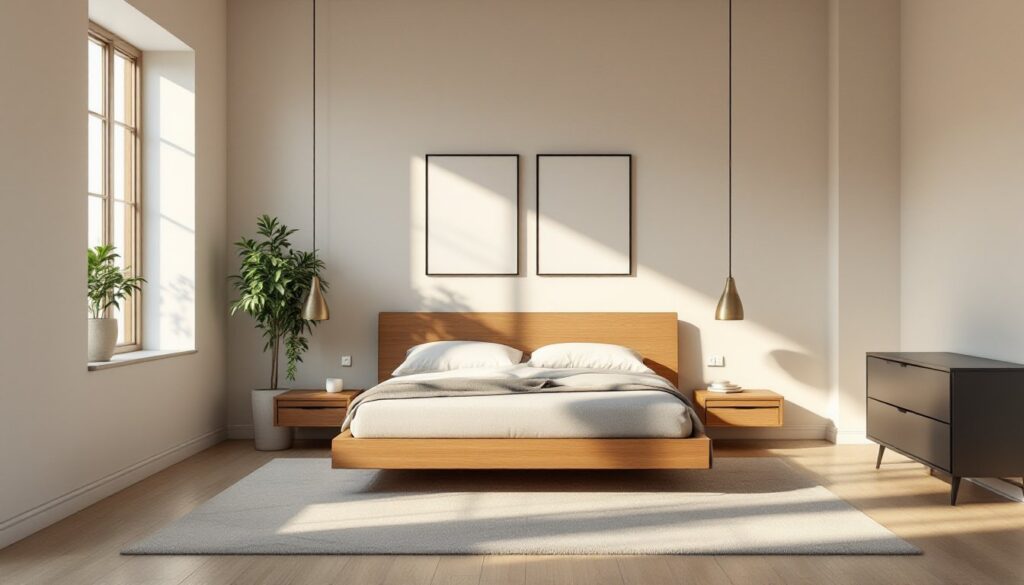
The bed anchors your room and sets the aesthetic tone. A platform bed, one with a solid or slatted base that eliminates the need for a box spring, is the workhorse of modern bedrooms. Platform beds look cleaner than traditional frame-and-box-spring setups and offer better support for memory foam or hybrid mattresses. They typically sit lower than conventional beds, which makes rooms feel more spacious and grounded.
Size matters. A queen is the most practical for couples (60 × 80 inches): a full (54 × 75 inches) works for single sleepers or smaller rooms: a king (76 × 80 inches) is worth the floor space if you have room and like sprawl. Measure the space you’re using, you want at least 24 inches of clearance on each side for comfortable movement. Platform beds come in wood (walnut, white oak, ash), upholstered panels (linen, leather), or metal frames. Wood frames with mid-tone finishes are the easiest to live with and pair with most décor. Check that the slats are spaced no more than 3 inches apart to support a mattress properly: wider gaps cause premature sag. A platform bed isn’t a furniture splurge, it’s where you spend a third of your life, so quality matters.
Nightstands and Storage Solutions
Nightstands serve double duty: functional storage and visual balance. A good rule is to match the nightstand height to your mattress top, roughly 24 to 28 inches, so reaching for your lamp or phone feels natural. Modern nightstands are typically lower and more minimal than traditional styles. A single drawer or shelf is often enough: overdesigned pieces with multiple drawers add bulk without proportional benefit.
Consider open shelving versus closed storage based on your habits. If you toss items on surfaces before bed, a drawer nightstand keeps clutter hidden. If you prefer visual simplicity, a floating nightstand (wall-mounted, no legs) makes the room feel larger and is especially useful in tight spaces. Floating models work best if your bed frame doesn’t extend to the wall. Match the nightstand material to your bed frame, if your bed is light wood, choose a similar finish: if it’s upholstered, a wood or metal nightstand offers contrast without jarring the eye.
If your room is small or your bed is centered away from walls, consider modern bedroom furniture options that pair slim nightstands with vertical wall storage. A narrow shelf unit or floating shelves above the nightstand adds practical storage without floor footprint. Store extra pillows, books, or decorative items at eye level to avoid that “stuff piled on top” look that kills modern spaces.
Dressers and Functional Accent Pieces
A dresser is non-negotiable for everyday clothing storage, but modern design demands it earn its visual weight. In a modern bedroom, a dresser is often a sculptural piece, something you want to see, not hide. Look for clean proportions: drawers that align flush with the frame, hardware that’s integrated rather than applied, and a finish that feels intentional. A low-profile dresser (30 to 36 inches tall) suits most bedrooms: taller high-boy dressers (48+ inches) work in rooms with high ceilings or limited wall space.
Drawer depth is practical but often overlooked. A 18-inch deep drawer holds folded shirts, socks, and undergarments comfortably: shallower drawers waste space or force awkward stacking. Soft-close mechanisms cost a bit more but prevent slamming and last longer. If you love a specific dresser but hate its handles, swap them, a simple hardware upgrade transforms the look and costs under $50 in most cases.
Consider pairing your dresser with a low accent chest or storage bench at the foot of the bed. These pieces add function (blanket or shoe storage) and visual interest without feeling cluttered. Benches also provide a practical landing spot for tomorrow’s outfit. Contemporary home styles often favor a single statement dresser over a matched set, so don’t feel locked into buying everything as a suite.
Selecting Materials and Finishes
Modern bedrooms thrive on material variety and honesty. Mix wood types and tones intentionally, a walnut dresser with a white oak bed frame and brushed steel nightstands feels curated, not mismatched. Avoid that “apartment-setup” vibe of everything being the same finish.
Solid wood (walnut, oak, cherry) is durable and ages beautifully but costs more upfront and requires basic care (occasional oiling, dust removal). Plywood with veneer offers stability and looks identical to solid wood at a fraction of the cost, it’s industry standard for mid-range furniture. Avoid thin veneers on particle board: they peel and chip easily. Metal frames, steel, aluminum, or wrought iron, work well for industrial or minimalist aesthetics and don’t require finishing. Upholstery (on beds or benches) softens modern spaces but demands regular vacuuming. Light linen shows dust: dark leather or performance fabrics hide wear better.
Finish choices matter for longevity and maintenance. Matte finishes feel contemporary but show fingerprints and dust: satin finishes balance looks and practicality. Gloss finishes are dramatic but need frequent wiping. Wood stain color should relate to your room’s light, rooms with cool northern light suit cooler, darker stains: warm southern light suits honey tones. If you’re unsure, order a finish sample from the manufacturer and live with it for a few days. Home Decorators Furniture and other retailers often provide samples so you can see how materials look in your actual space, not under showroom lights.
Lighting and Accessories That Complete the Look
Lighting shapes how furniture looks and how your room feels. A pendant light above each nightstand (instead of table lamps) saves surface space and looks more curated. Hang pendants 12 to 18 inches above the nightstand for comfortable reading without glare. A flush-mount ceiling fixture or modern chandelier centers the room visually. Layer your lighting: overhead for general illumination, task lighting at nightstands, and accent lighting (a wall sconce, LED strip behind a floating shelf) to create depth.
Accessories anchor modern design without clutter. A throw pillow in a contrasting color or texture, a geometric print above the bed, and a simple area rug under the bed soften hard lines and define the sleeping zone. Keep it minimal, three pillows, one throw blanket, one or two pieces of wall art. A platform base storage bed paired with a single wooden ladder for a throw reads modern and Japanese-influenced: the same bed with sculptural brass nightstands reads contemporary.
Plants are modern design staples, they soften corners and improve air quality. A low maintenance pothos or monstera in a simple ceramic pot suits windowsills or corners. Avoid fussy arrangements: one statement plant beats five small pots. Your nightstands should hold only essentials: a lamp, phone charger, and perhaps a small tray for watches or glasses. Surface clutter kills the modern aesthetic faster than anything else. Resources like Homedit showcase how accessorizing restraint, choosing fewer, intentional pieces, creates luxury without excess.
Conclusion
Modern bedroom furniture is an investment in rest and visual calm. Start with a solid platform bed and nightstands that suit your space, add a dresser that excites you, choose materials honestly, and light your room thoughtfully. Avoid the trap of buying everything at once from one retailer, the best rooms evolve as you find pieces that genuinely fit your life. Quality basics outlast trends, so prioritize durability and proportion over novelty. Your bedroom should feel like a retreat, not a showroom.