
Table of Contents
ToggleGetting your patio furniture layout right makes the difference between a backyard that feels cramped or chaotic and one that actually works. Whether you’re entertaining a crowd, settling in with a book, or juggling both, the arrangement you choose sets the tone for how you’ll use the space. This guide walks through seven practical patio furniture layout ideas, each tailored to different purposes and square footage. You’ll learn how to position pieces for maximum comfort, traffic flow, and visual balance, without overthinking it or wasting money on furniture that doesn’t fit your lifestyle.
Key Takeaways
- Assess your patio’s footprint and primary purpose before arranging furniture to create a layout that works with your space instead of against it, with at least 30–48 inches of clearance between pieces for comfortable traffic flow.
- The conversation circle layout is ideal for socializing spaces, with four to six chairs angled toward each other 2–3 feet apart and scattered side tables instead of a center coffee table to maximize conversation room.
- A linear dining setup maximizes rectangular patios by positioning the table parallel to the house with 36 inches of clearance on all sides, and benches save space compared to chairs with legs.
- Combine lounge and dining zones on mid-sized patios by positioning them 8–10 feet apart with a subtle boundary using rugs, planters, or sculptures to signal a transition without overcrowding.
- Small patios under 12×12 feet require ruthless efficiency—choose a primary use like a compact 32–36 inch dining table or L-shaped sectional, and maximize vertical space with wall-mounted planters and lightweight stackable furniture.
- Visual balance, clear sight lines to focal points, and layered finishes prevent a patio from feeling cluttered; finishing touches like area rugs, string lights, and strategic greenery anchor your layout and extend usable hours.
Assess Your Space and Purpose
Before arranging a single chair, step back and answer two simple questions: What’s your patio’s footprint, and what will you actually do there?
Measure your usable space in feet, include anything that won’t be permanently occupied (deck railings, planter boxes, shade structures). Jot down the dimensions and note problem areas: afternoon sun, wind exposure, noise from the street, or a slope that affects drainage. You’re building a layout that works with your site, not against it.
Next, define your primary use. Are you cooking and dining? Hosting large groups? Creating a quiet reading nook? Most patios serve 2–3 purposes simultaneously, say, a dining zone with a lounge area nearby. This dual-purpose thinking shapes furniture selection and spacing. Expect to leave at least 30 inches of clearance between furniture pieces for comfortable foot traffic: 36–48 inches is better if you’re moving food or drinks.
Consider flow paths. Picture people moving from the house door to the far end of the patio. Where will they naturally walk? You don’t want traffic funneling directly through the middle of your seating circle. A few strategic placements, or even a scattered arrangement of planters, can gently redirect movement without feeling forced. Finally, think about furniture scale. A dining table for six looks tiny on a sprawling 20×30 deck: on a compact 12×14 patio, it dominates. Oversized sectionals can swallow a small space, while undersized pieces disappear in a large one.
The Conversation Circle Layout
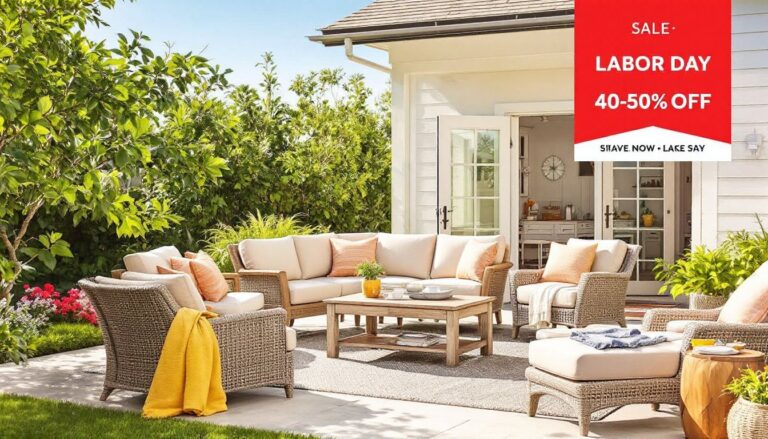
The conversation circle, or informal seating cluster, works beautifully for patios where socializing is the goal. Arrange four to six chairs or small sofas in a loose circle or hexagon, angled slightly toward one another. Leave about 2–3 feet between seat edges so people can chat without shouting.
This layout is forgiving with odd-shaped patios because you’re not tied to a rigid line. You can tuck the arrangement into a corner, angle it toward a view, or position it on a diagonal to make a tight space feel larger. Add a small side table or two within arm’s reach of the seating, low accent tables work best so they don’t block sightlines.
Skip the center coffee table if your seating is tight: it eats up the conversation space and forces you to place it uncomfortably close to someone’s knees. If you want somewhere to set drinks, use individual side tables scattered around the circle. The beauty of this layout is flexibility: people can easily pull chairs aside to fit more guests, or shrink the circle on quiet evenings. Pair this arrangement with outdoor rug secrets that can define the gathering zone without physically blocking flow. A 5×7 or 6×9 rug anchors the seating and adds warmth underfoot.
The Linear Dining Setup
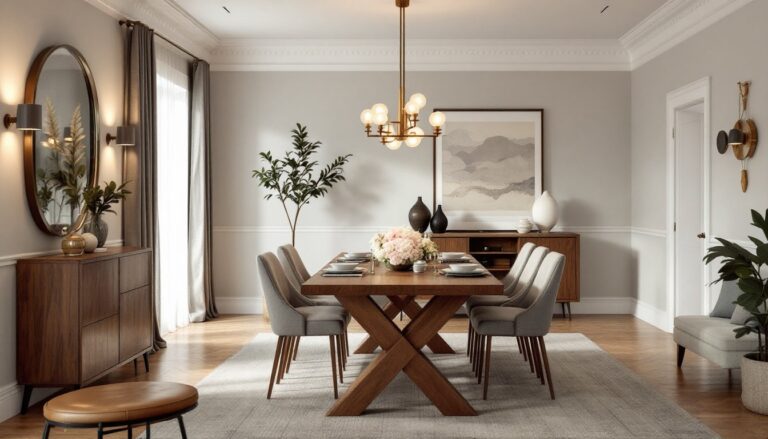
A linear layout, dining table running parallel to the house or a long edge of the patio, maximizes a rectangular or narrow space. Place your table perpendicular to the view (if there is one) or facing toward the house for easy kitchen access.
For a 6-person table on a standard-sized patio, allow about 36 inches of clearance on all sides for pulling chairs back and moving around. A 4-person rectangular table fits snugly in 12×16 feet: add a few feet on each end if you plan to set serving dishes or use the ends as a bar. Position benches on the long sides rather than chairs if space is tight, benches pull tight against the table, saving about 12 inches of depth compared to chairs with legs.
Consider your grill or outdoor kitchen placement relative to the table. A 3-foot clearance between dining seating and any heat source (grill, pizza oven, fire pit) is safe and prevents smoke from drifting directly across the table. If your patio is under a pergola or umbrella, position the table to maximize shade during the times you’ll actually eat. Morning light and afternoon heat are vastly different experiences. Extending this idea, home styles furniture that balances durability with aesthetics allows you to pick pieces that age well in variable sun and weather without fading or splitting.
The Lounge and Social Zone Combination
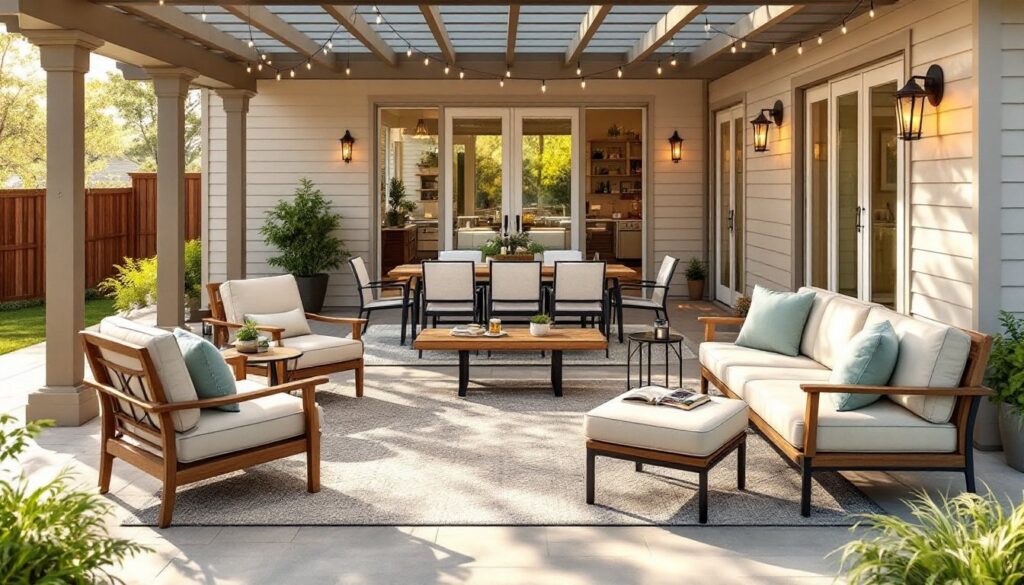
Blending a dining area with a lounge zone keeps your patio versatile without feeling scattered. Divide your space visually using furniture placement, a change in decking material, or a rug.
Creating Distinct Areas Without Overcrowding
Start with the social focal point, usually the conversation seating. Position this 8–10 feet away from a dining table. This separation lets the two zones function independently: dinner guests don’t lounge in the dining chairs afterward, and lounging folks aren’t tempted to snack crumbs onto someone’s meal.
Use a low accent table, a planter, or a garden sculpture as a subtle boundary between zones. You’re not building a wall: you’re signaling a transition. A 4×6 or 5×7 rug under the lounge seating anchors that space visually and acoustically, making it feel intentional. Pair the sofas with built-in benches or a low coffee table for drinks and books. Position any occasional chairs or poufs perpendicular to the main seating to create intimacy without forcing people face-to-face.
The dining zone can remain simpler, table, chairs, maybe a drink station or sideboard on one end. Keep sight lines open between zones. Tall shrubs, screens, or shade structures positioned too close to both areas will chop up your patio into isolated pockets. A pergola that covers one zone without completely blocking sightlines works well. This combination layout shines on mid-sized patios (16×20 to 20×24 feet) where you have room to breathe but not so much that two separate zones feel wastefully spread out. You’ll find park home furniture ideas that emphasize space efficiency particularly useful if you’re working with square footage constraints.
Maximizing Small Patios With Smart Furniture Placement
Small patios (under 12×12 feet) demand ruthless efficiency. You can’t fit a full dining setup and lounge seating: choose one primary use and layer in secondary function.
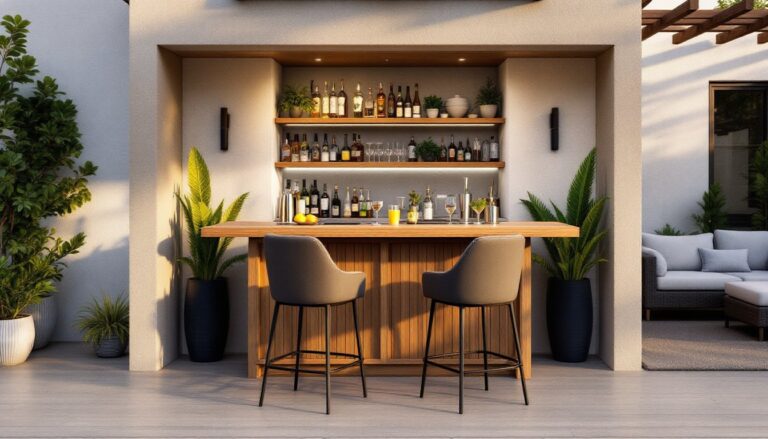
Opt for a compact dining table, 32–36 inches diameter works for two to four people and tucks easily into a corner. Or use a narrow console or bistro-height table that doubles as a bar. Pair it with stools that slide completely underneath when not in use. This saves floor space compared to chairs with legs.
For a seating-focused patio, a loveseat or L-shaped sectional (not an oversized sectional) anchors the space. Add a side table and a small ottoman that moves around as needed. The ottoman strategy matters: a lightweight storage ottoman works as extra seating, a footrest, or a side table.
Use vertical space aggressively. Wall-mounted planters, trellises, and even a small wall-hung bar or shelving free up ground-level square footage. Hanging plants overhead create the illusion of a larger, more garden-like space without eating into sitting room. Furniture arrangement also depends on how often you open the patio door. If foot traffic flows directly out, don’t block it, frame the path with seating angled inward on both sides.
Choose lightweight, stackable, or nesting pieces. A set of stacking chairs takes up a fraction of the storage space of six fixed lounge chairs. Modern bistro sets fold compactly, ideal for patios that shift use seasonally. Finally, one large umbrella or shade sail does more work than scattered shade structures: a single anchor piece creates visual cohesion in a cramped layout.
Flow, Balance, and Finishing Touches
The difference between a well-arranged patio and a cluttered one often comes down to balance and breathing room. Step back and check for visual weight distribution: is all your seating clustered on one side? Does the patio feel lopsided? Spread substantial pieces, sofas, large tables, shade structures, across the space so no single area dominates.
Create sight lines. A clear view to a focal point, a garden, a view, a fire pit, pulls the eye outward and makes the space feel larger. Avoid blocking these with a tall planter or a wide piece of furniture placed dead-center.
Layering finishes matters too. Pair wooden furniture with metal accents, mix cushion colors and textures, and incorporate different materials (stone, metal, wood, upholstery). This visual variety prevents the space from feeling sterile or monotonous. Resources like The Spruce offer comprehensive design guidance for color palettes and material pairings that work outdoors.
Before finalizing your layout, walk through it multiple times: at different times of day, in different weather, with imaginary guests. Sit in each spot and ask yourself, “Is this comfortable? Can I reach a table? Can I move freely?” Small adjustments, rotating a chair 10 degrees, moving a side table 18 inches closer, often feel minor but dramatically improve usability.
Finishing touches anchor your layout: an outdoor area rug defines zones and adds cushioning underfoot, throw pillows invite lingering, and ambient lighting (string lights, solar stakes, lanterns) extends your patio’s usable hours and creates mood. A simple color scheme, two or three paint colors and two wood tones, unifies diverse furniture pieces and feels intentional rather than random. Add greenery tactically: potted plants at corners or entry points guide traffic flow, while hanging planters draw the eye upward and frame overhead structures like pergolas.
Design inspiration abounds on Hunker’s home improvement and design sections, which showcase real patios and walkable solutions. The common thread among well-loved outdoor spaces is restraint: resist the urge to fill every gap. Empty space breathes and makes a patio feel intentional and calming.